Feedbag
YEAR:
2025
DURATION:
10 WEEKS
COOPERATION:
LAERDAL
A feedback-driven ventilation bag for high-performance CPR.

Feedbag
Feedbag
A feedback-driven ventilation bag for high-performance CPR.
A feedback-driven ventilation bag for high-performance CPR.

YEAR:
YEAR:
2025
2025
DURATION:
DURATION:
10 WEEKS
10 WEEKS
COOPERATION:
COOPERATION:
LAERDAL
LAERDAL
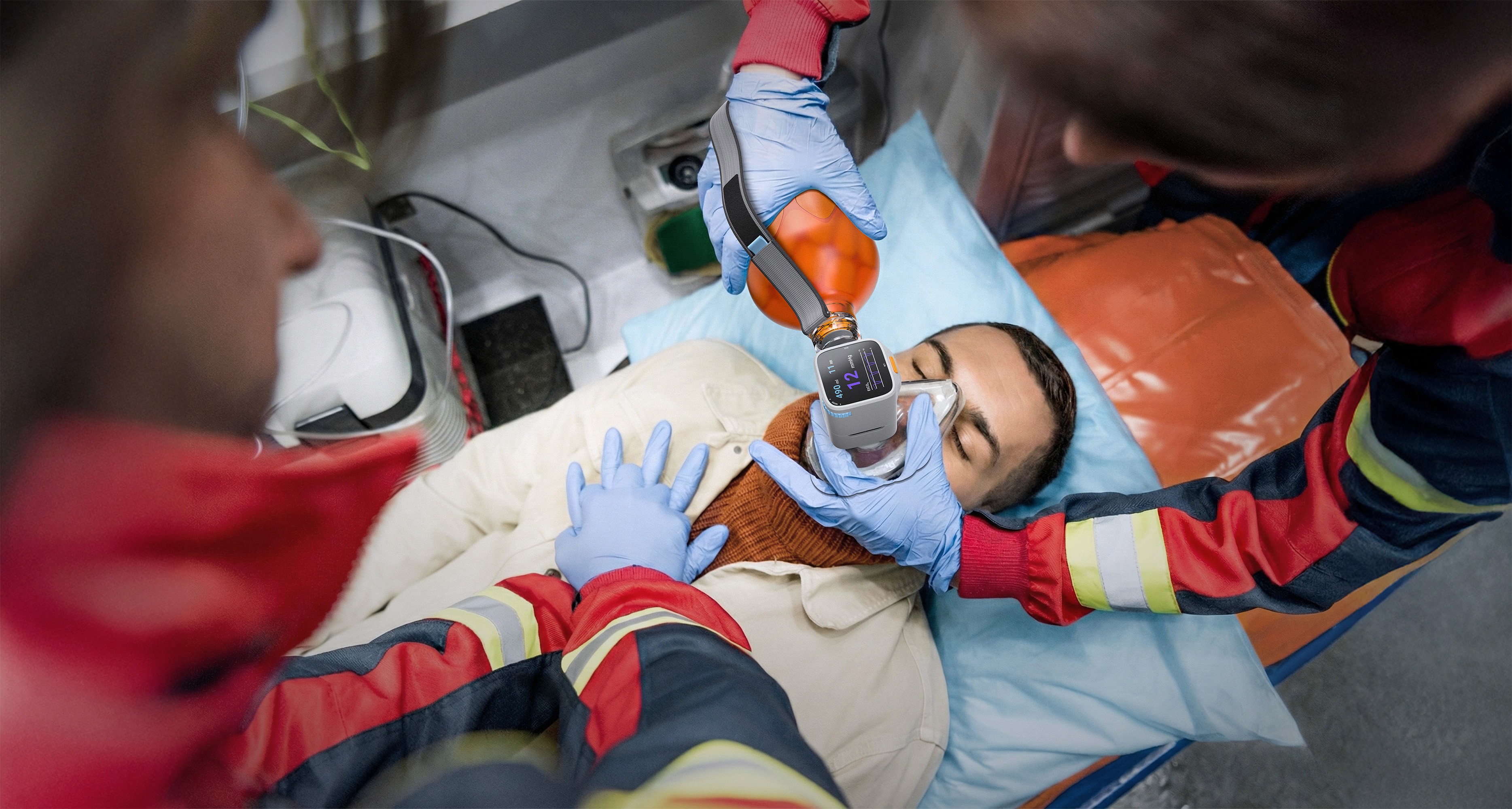
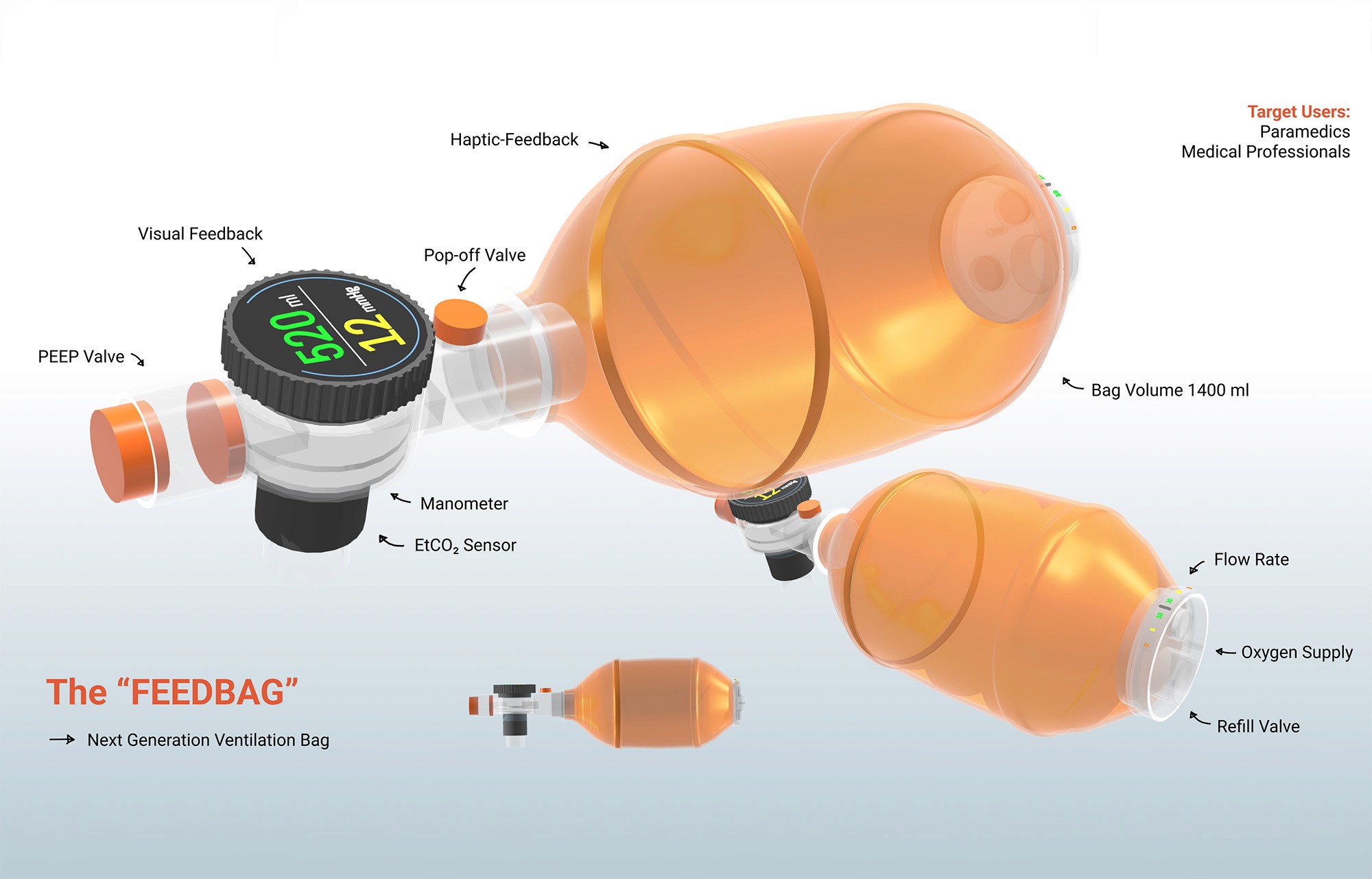
This project transforms the standard CPR ventilation bag from a basic, passive tool into an intelligent, active partner. By adding haptic feedback and clear visual guidance. It removes the guesswork from high-stress emergencies to protect the patient from further harm.
This project transforms the standard CPR ventilation bag from a basic, passive tool into an intelligent, active partner. By adding haptic feedback and clear visual guidance. It removes the guesswork from high-stress emergencies to protect the patient from further harm.
Challenge
Challenge
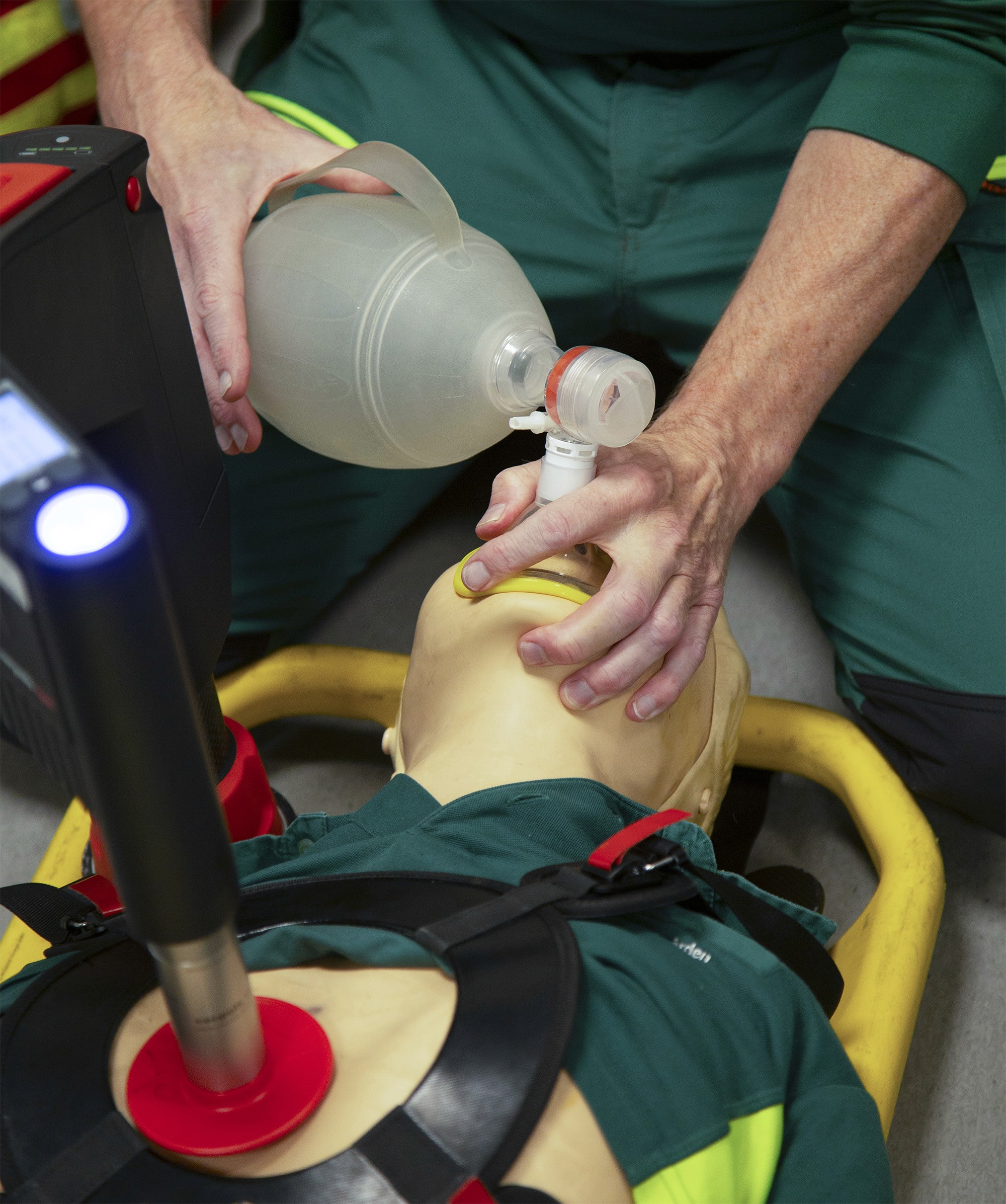
The standard ventilation bag provides zero feedback to the user. During a crisis, adrenaline makes it incredibly difficult for a user to judge time and physical pressure accurately. Without a built-in feedback loop to guide them, even trained professionals struggle to maintain the correct rhythm and volume required to save a life.
The standard ventilation bag provides zero feedback to the user. During a crisis, adrenaline makes it incredibly difficult for a user to judge time and physical pressure accurately. Without a built-in feedback loop to guide them, even trained professionals struggle to maintain the correct rhythm and volume required to save a life.
"How might we redesign the ventilation bag to improve CPR quality ?"
"How might we redesign the ventilation bag to improve CPR quality ?"
Analyze
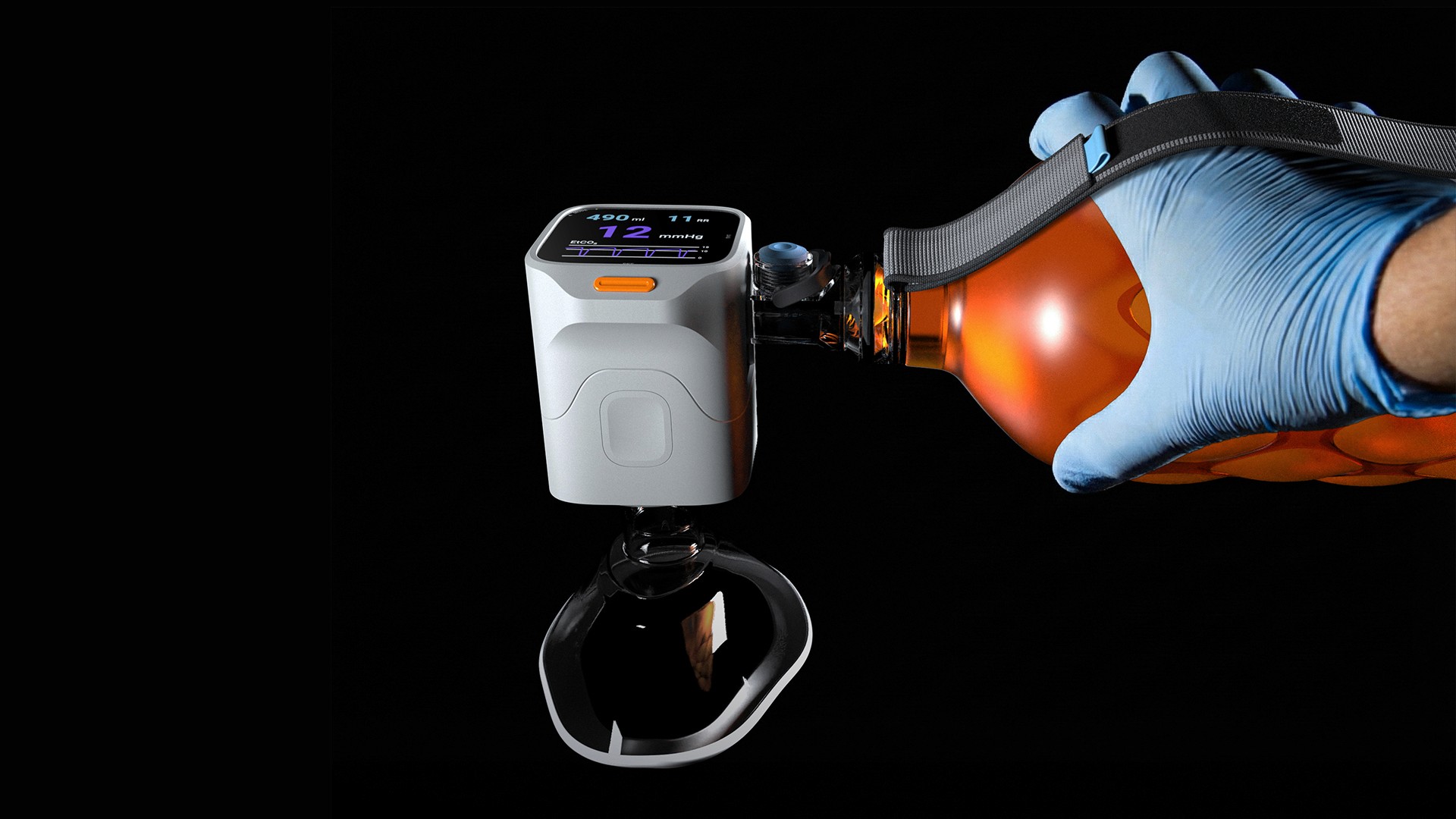
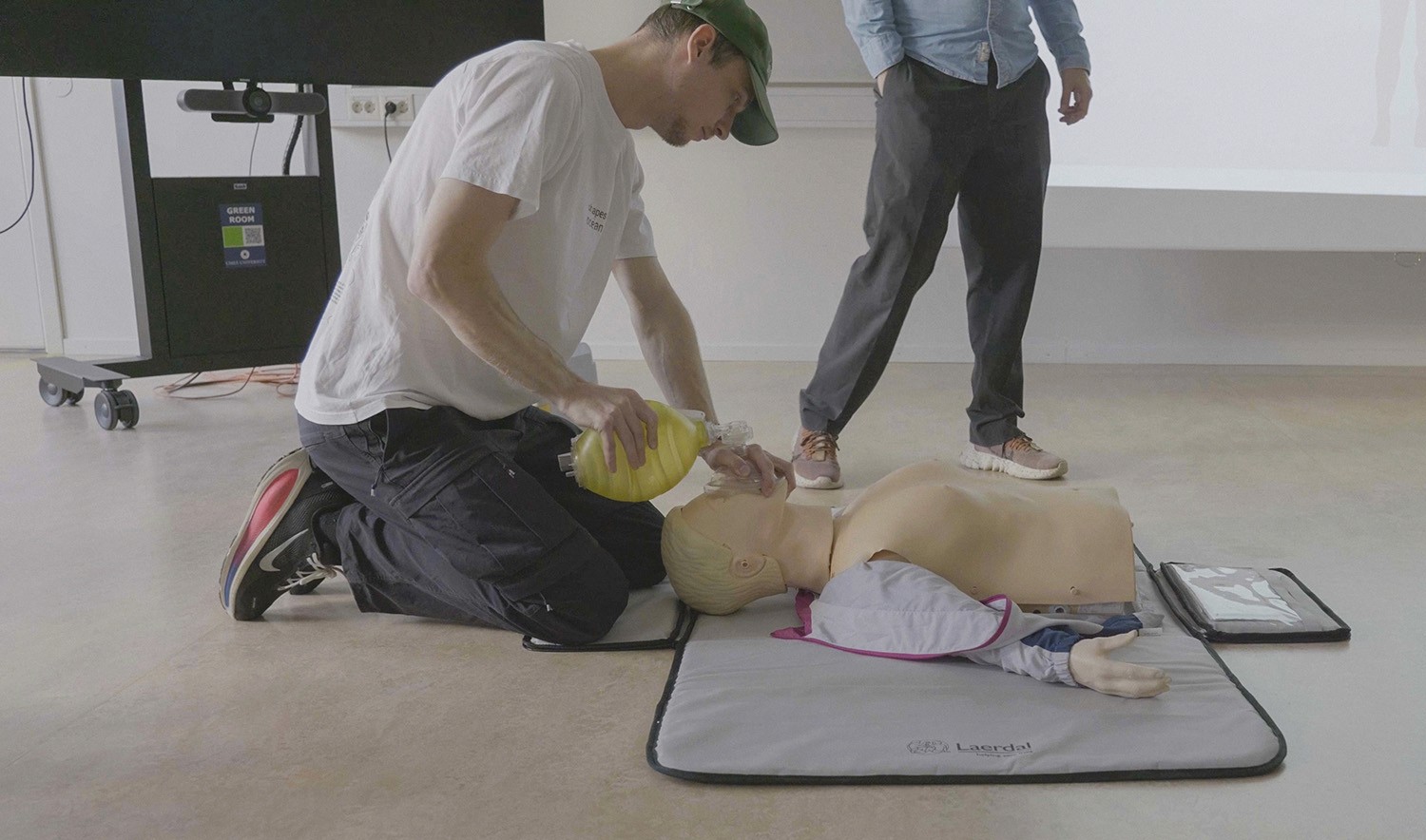
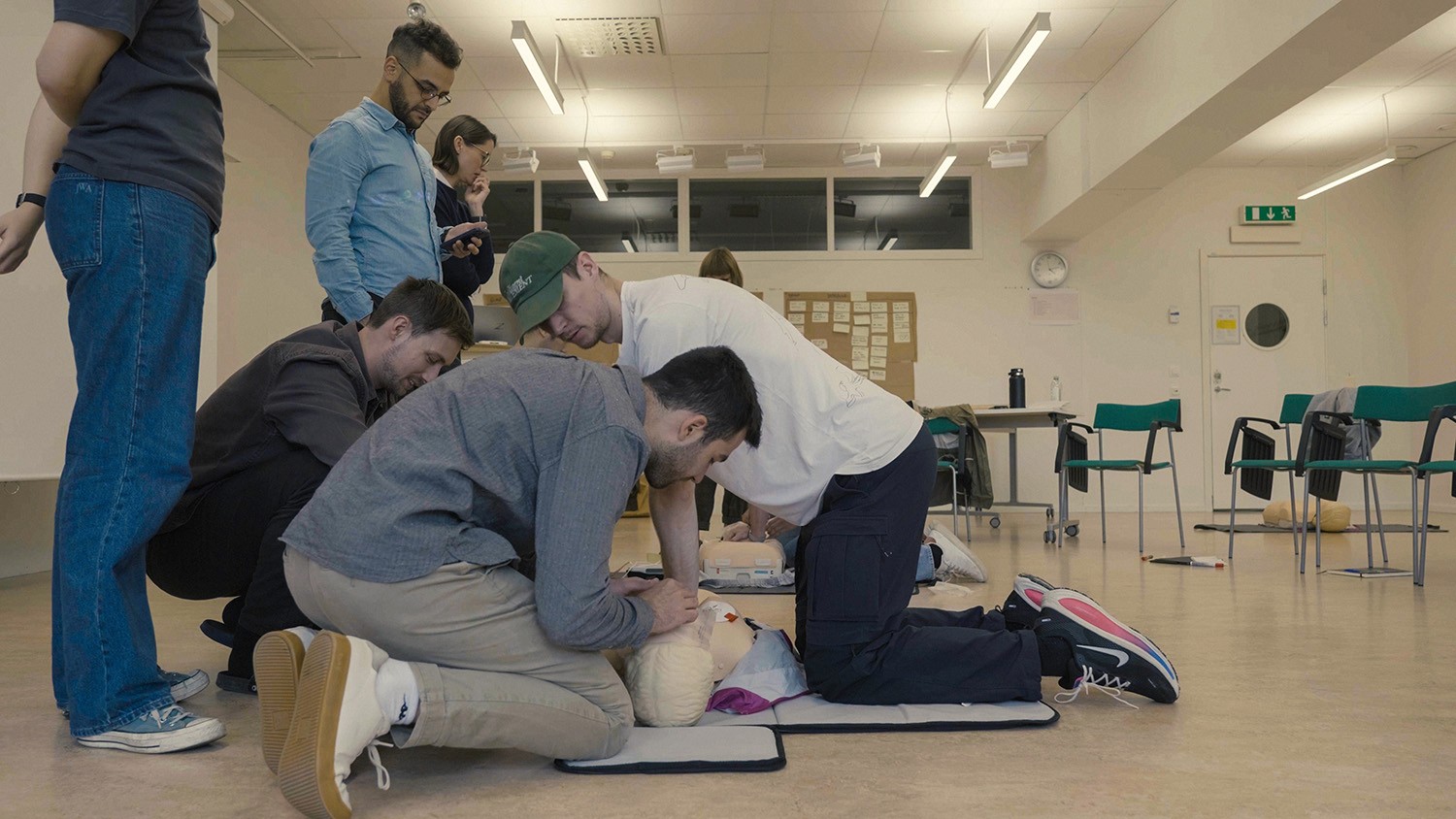
The project began with practical CPR training led by our cooperation partner, Laerdal. Experiencing a simulated emergency allowed me to physically interact with the current ventilation bag under pressure, leading to first-hand identification of the ergonomic and cognitive challenges that drive manual ventilation errors.
Analyze
The project began with practical CPR training led by our cooperation partner, Laerdal. Experiencing a simulated emergency allowed me to physically interact with the current ventilation bag under pressure, leading to first-hand identification of the ergonomic and cognitive challenges that drive manual ventilation errors.
Ideate
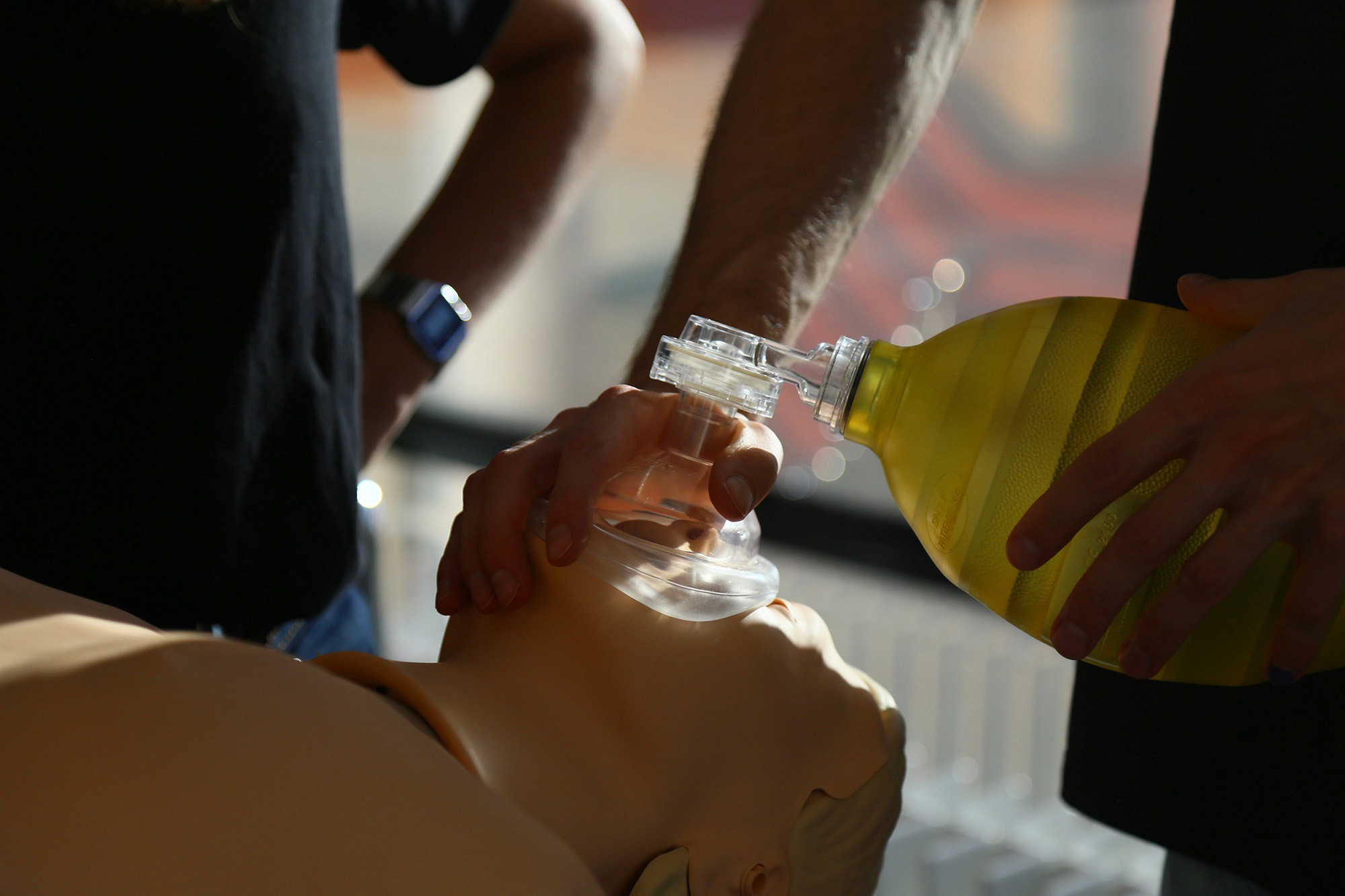
I initially generated multiple design directions to solve isolated challenges like mask seal and hand fatigue. By evaluating these concepts, it became clear that the fundamental issue was the complete lack of user feedback. This insight drove my decision to focus on integrating real-time feedback.
Ideate
I initially generated multiple design directions to solve isolated challenges like mask seal and hand fatigue. By evaluating these concepts, it became clear that the fundamental issue was the complete lack of user feedback. This insight drove my decision to focus on integrating real-time feedback.
Prototype
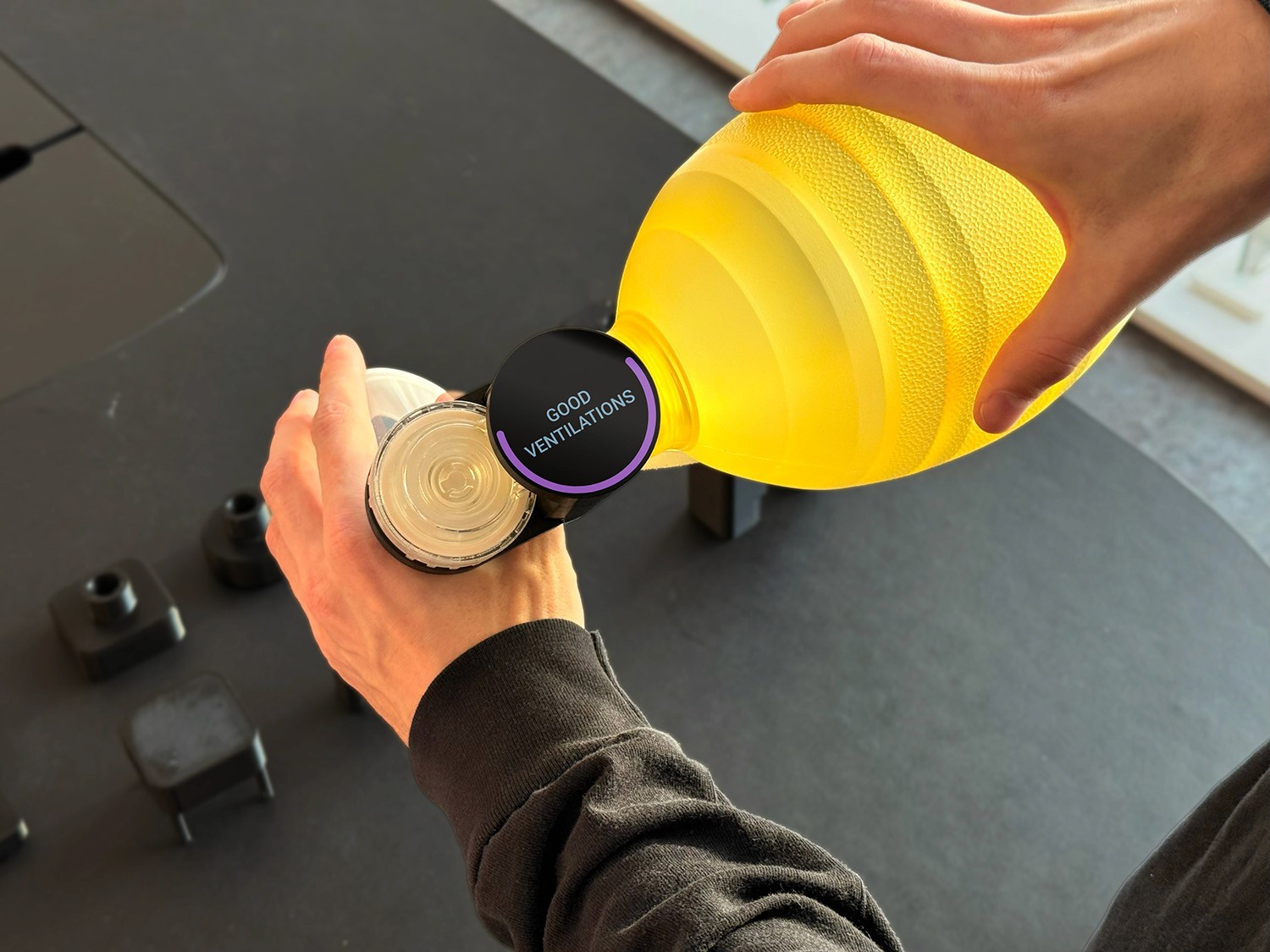
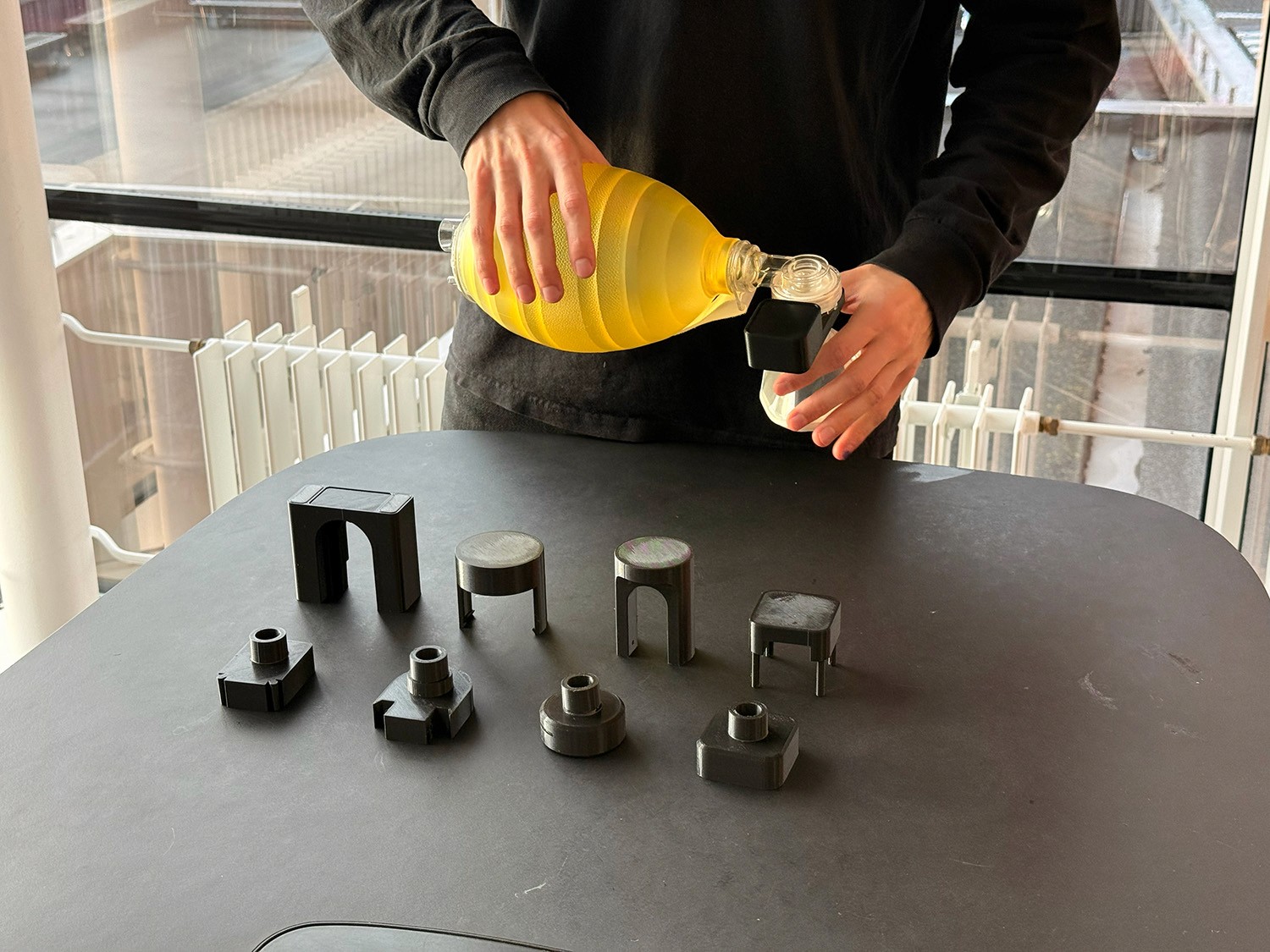
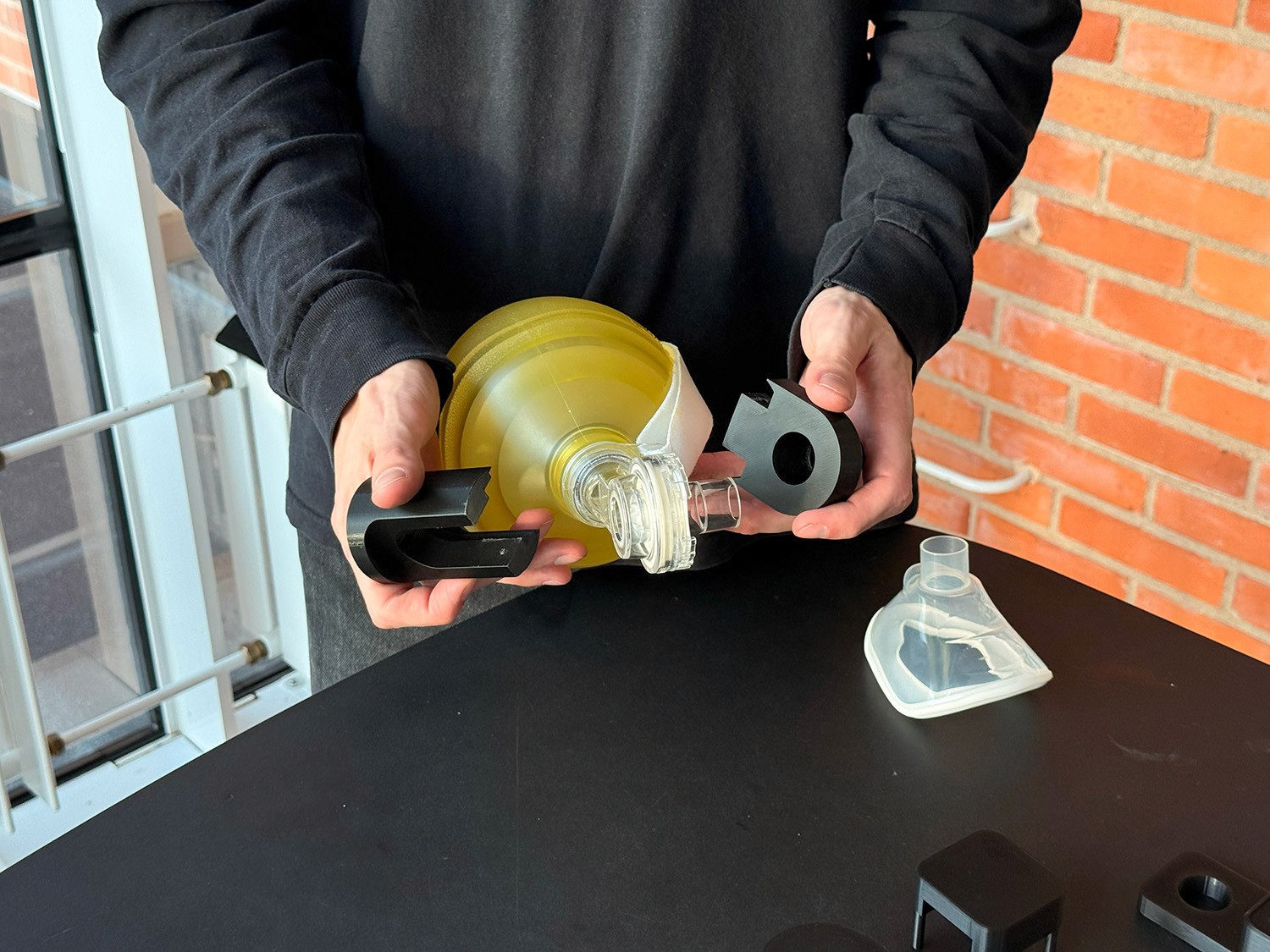
3D printing drove the physical development of the device. By rapidly prototyping multiple iterations, I was able to validate shapes, sizes, and proportions for optimal user ergonomics. These physical models were also critical for developing a seamless and secure attachment mechanism between the feedback device and the bag.
Prototype
3D printing drove the physical development of the device. By rapidly prototyping multiple iterations, I was able to validate shapes, sizes, and proportions for optimal user ergonomics. These physical models were also critical for developing a seamless and secure attachment mechanism between the feedback device and the bag.
Validate
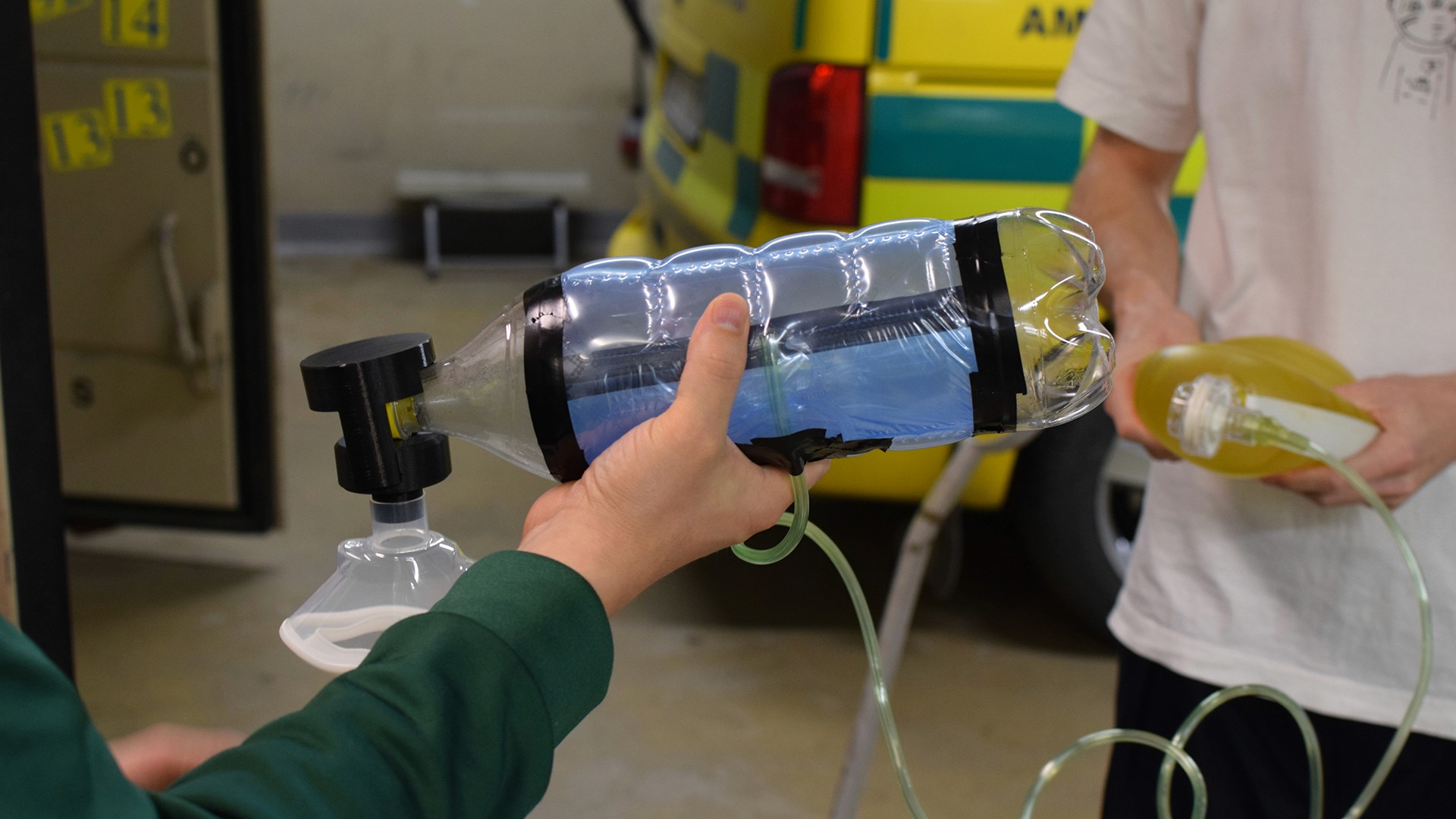
To validate the design, I collaborated closely with local paramedics who tested the physical prototypes in simulated scenarios. Their direct insights guided the final concept refinement, with professionals specifically highlighting the intuitive haptic feedback as a game-changer for maintaining focus under pressure.
Validate
To validate the design, I collaborated closely with local paramedics who tested the physical prototypes in simulated scenarios. Their direct insights guided the final concept refinement, with professionals specifically highlighting the intuitive haptic feedback as a game-changer for maintaining focus under pressure.
Compare
Compare
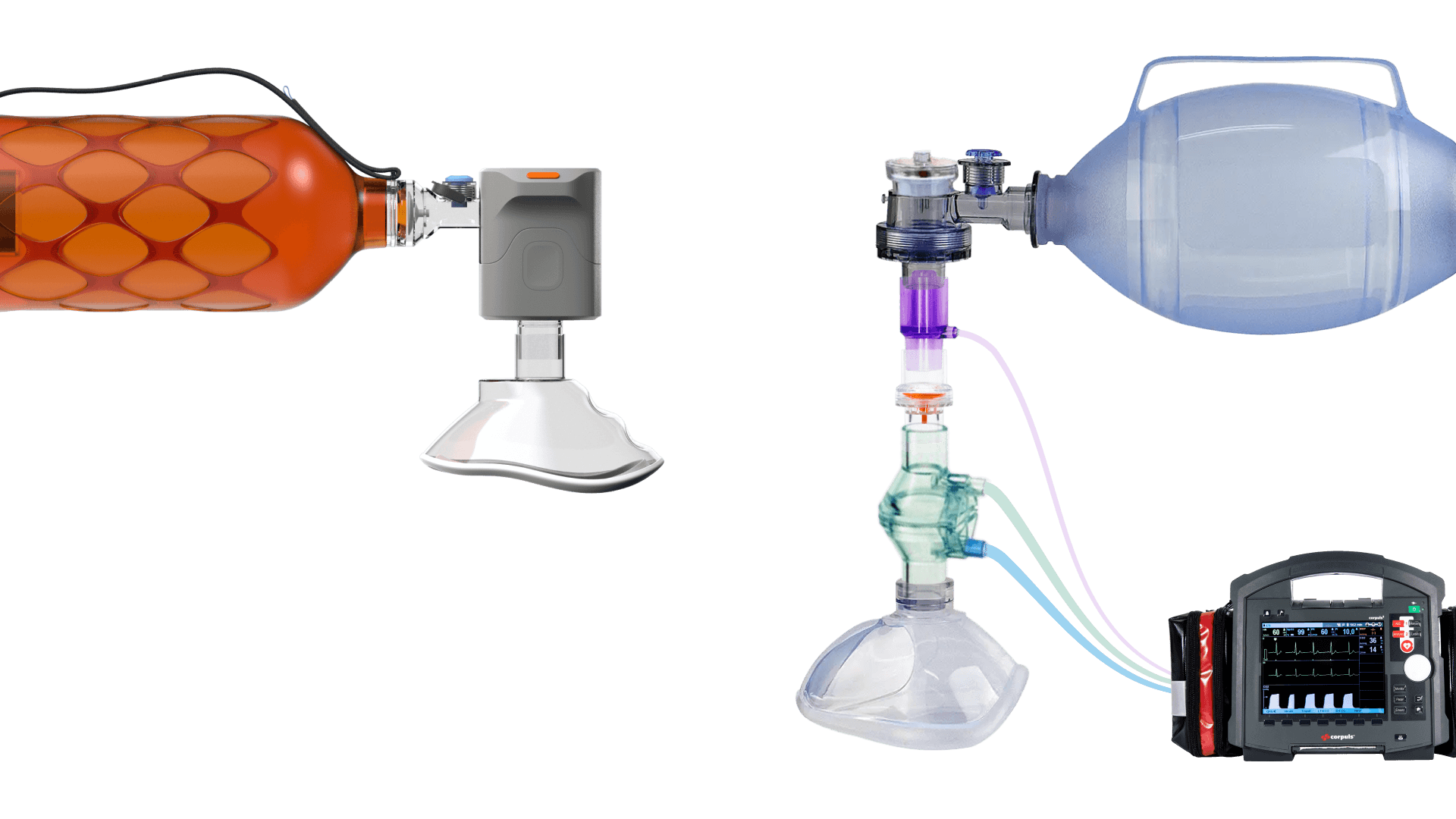
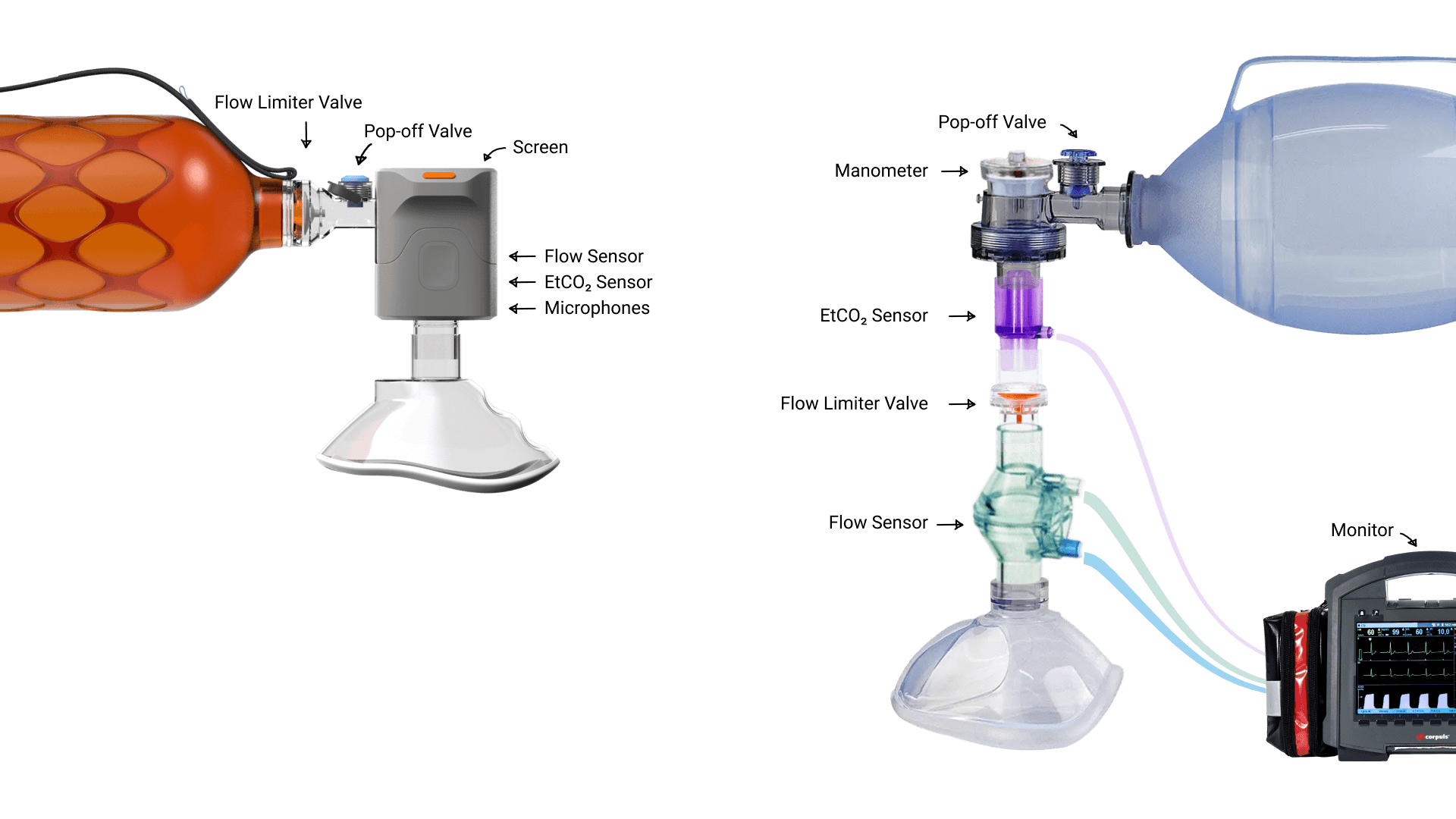
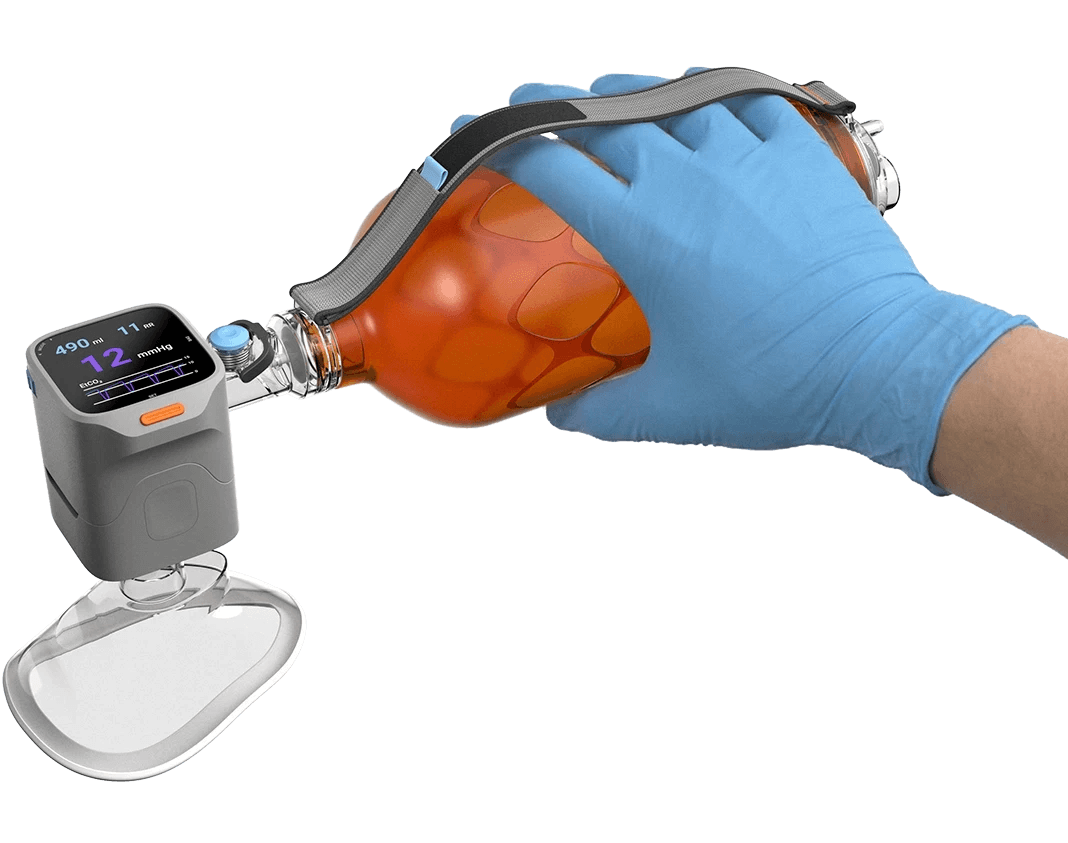
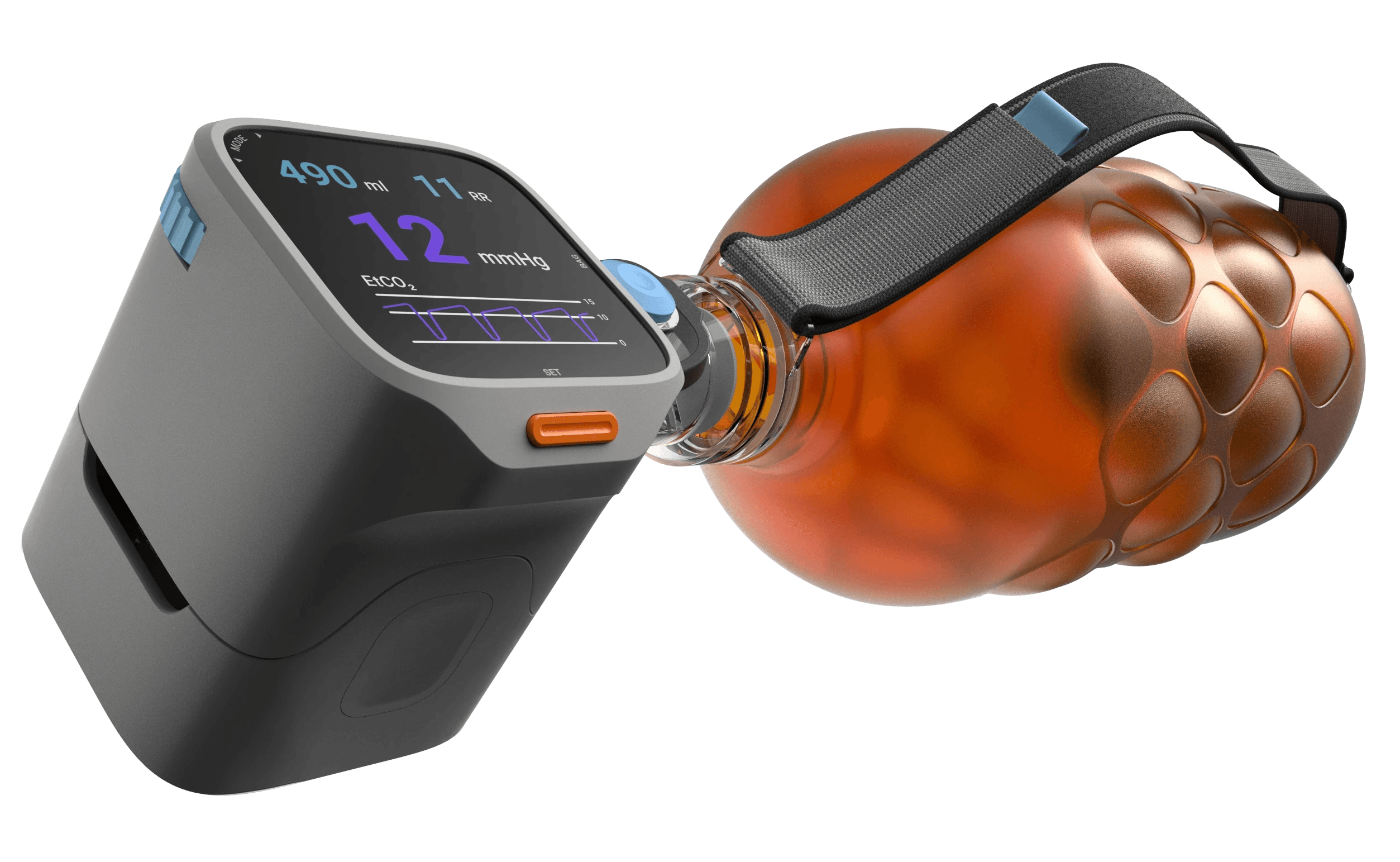
Todays ventilation bags require stacking separate sensors and valves into a clunky tower, to get us much feedback as possible. On top of that forcing users to look away at distant monitors instead of keeping their eyes on the patient. This akward setup leads to paramedics avoiding to you these sensors.
Todays ventilation bags require stacking separate sensors and valves into a clunky tower, to get us much feedback as possible. On top of that forcing users to look away at distant monitors instead of keeping their eyes on the patient. This akward setup leads to paramedics avoiding to you these sensors. My design integrates everything into one sleek housing with a built-in display, drastically improving ergonomicsand accessibility which allows keeping the rescuer’s focus exactly where it belongs: on the patient.
My design integrates everything into one sleek housing with a built-in display, drastically improving ergonomicsand accessibility which allows keeping the rescuer’s focus exactly where it belongs: on the patient.
Setup
Setup
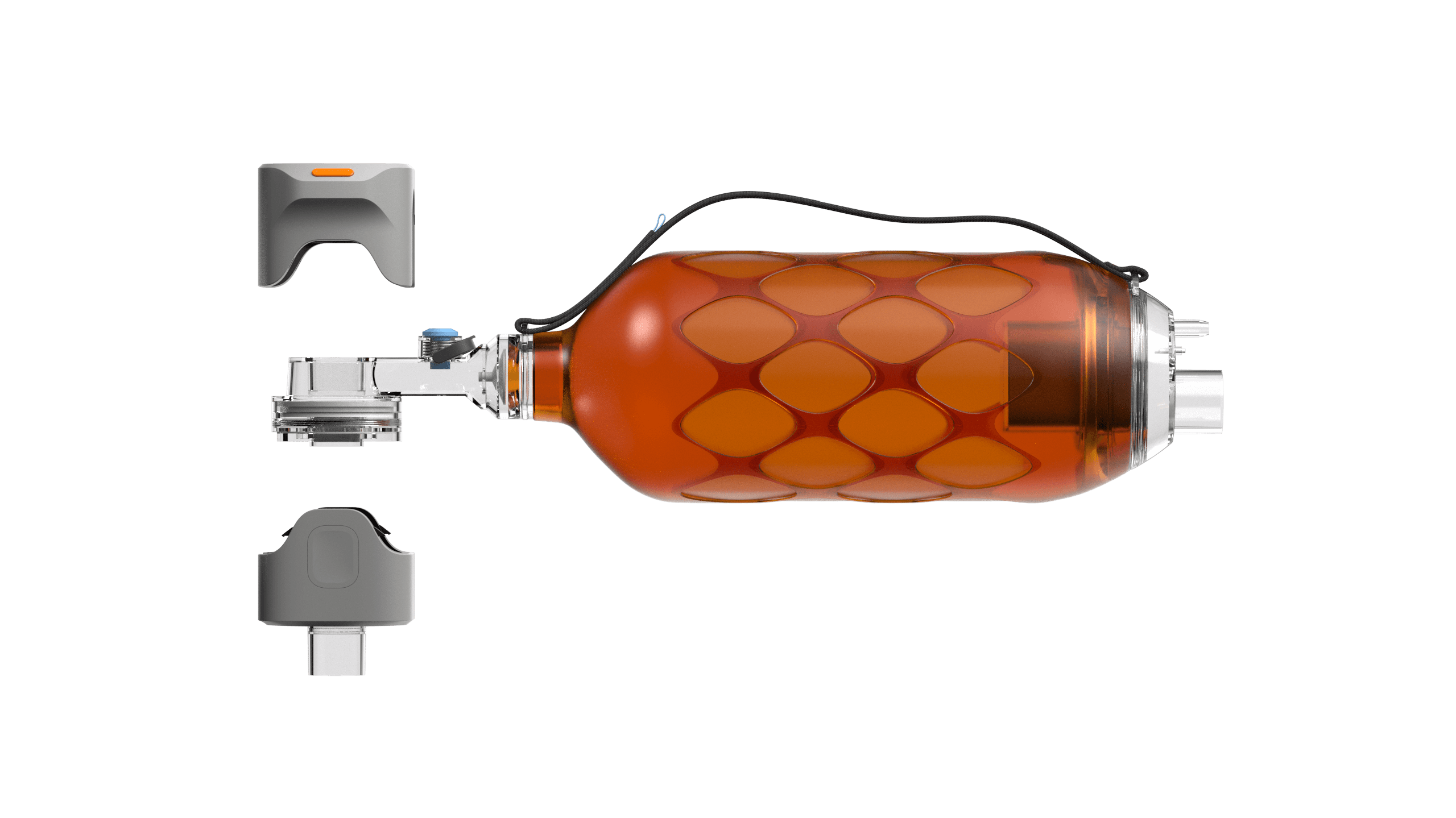
The two-component architecture enables seamless top-and-bottom attachment, ensuring a precise fit around existing valve systems. For quick removal, the design utilizes an intuitive snap-hook mechanism.
The two-component architecture enables seamless top-and-bottom attachment, ensuring a precise fit around existing valve systems. For quick removal, the design utilizes an intuitive snap-hook mechanism. By isolating the advanced electronics, this design supports a circular lifecycle for high-value parts and a flexible single-use or sterilization approach for the other bag components.
By isolating the advanced electronics, this design supports a circular lifecycle for high-value parts and a flexible single-use or sterilization approach for the other bag components.
Pneumatics
Pneumatics
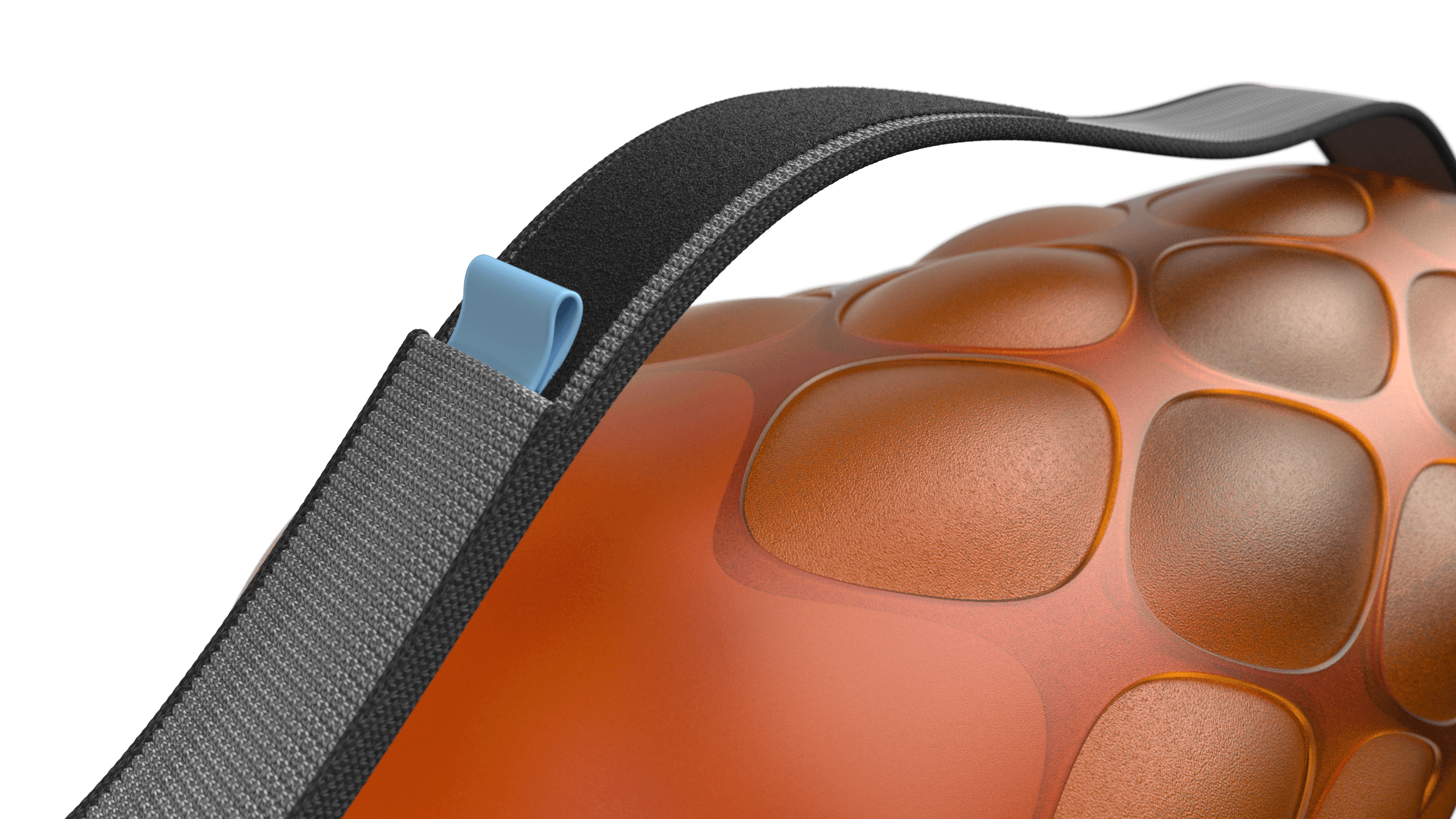
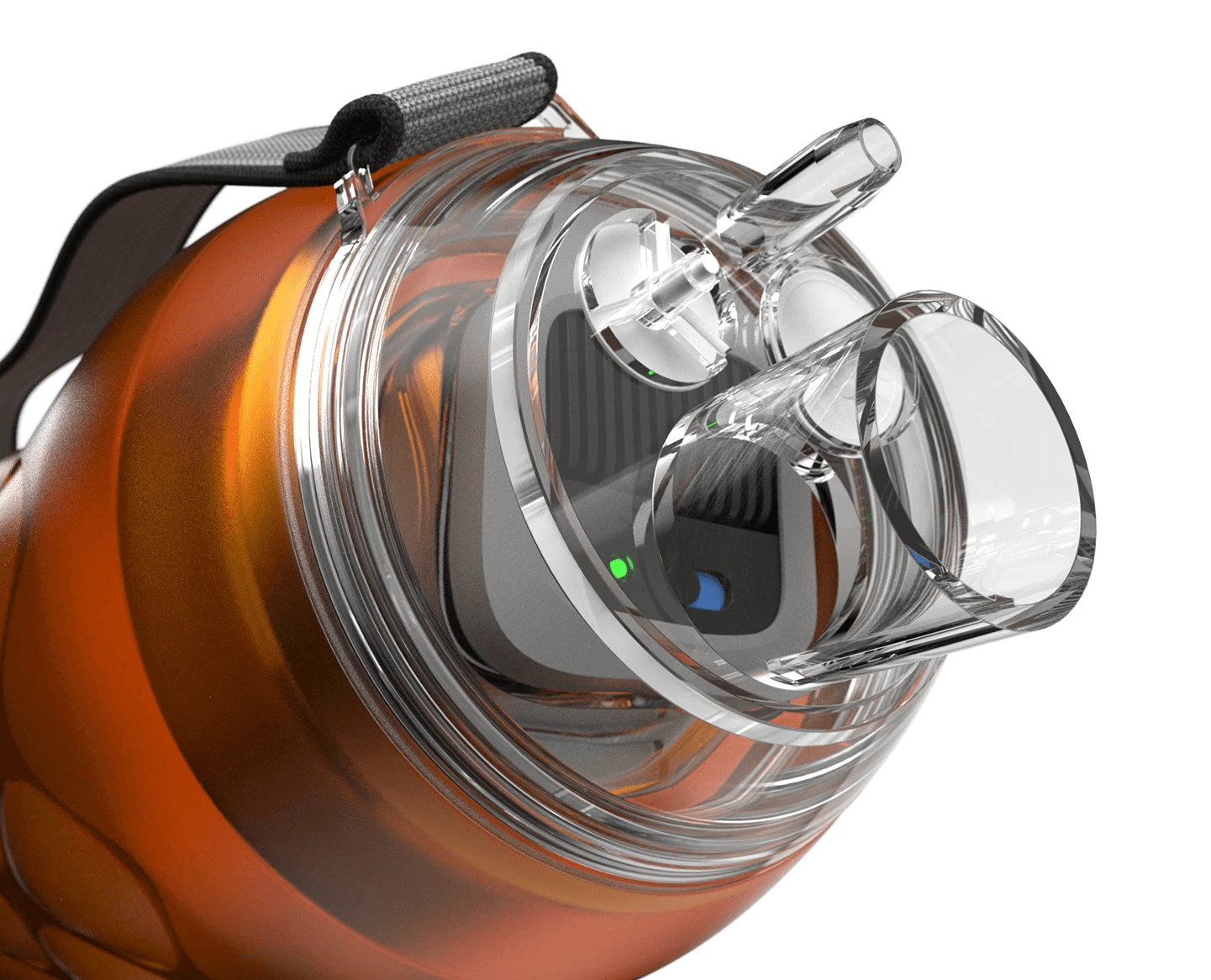
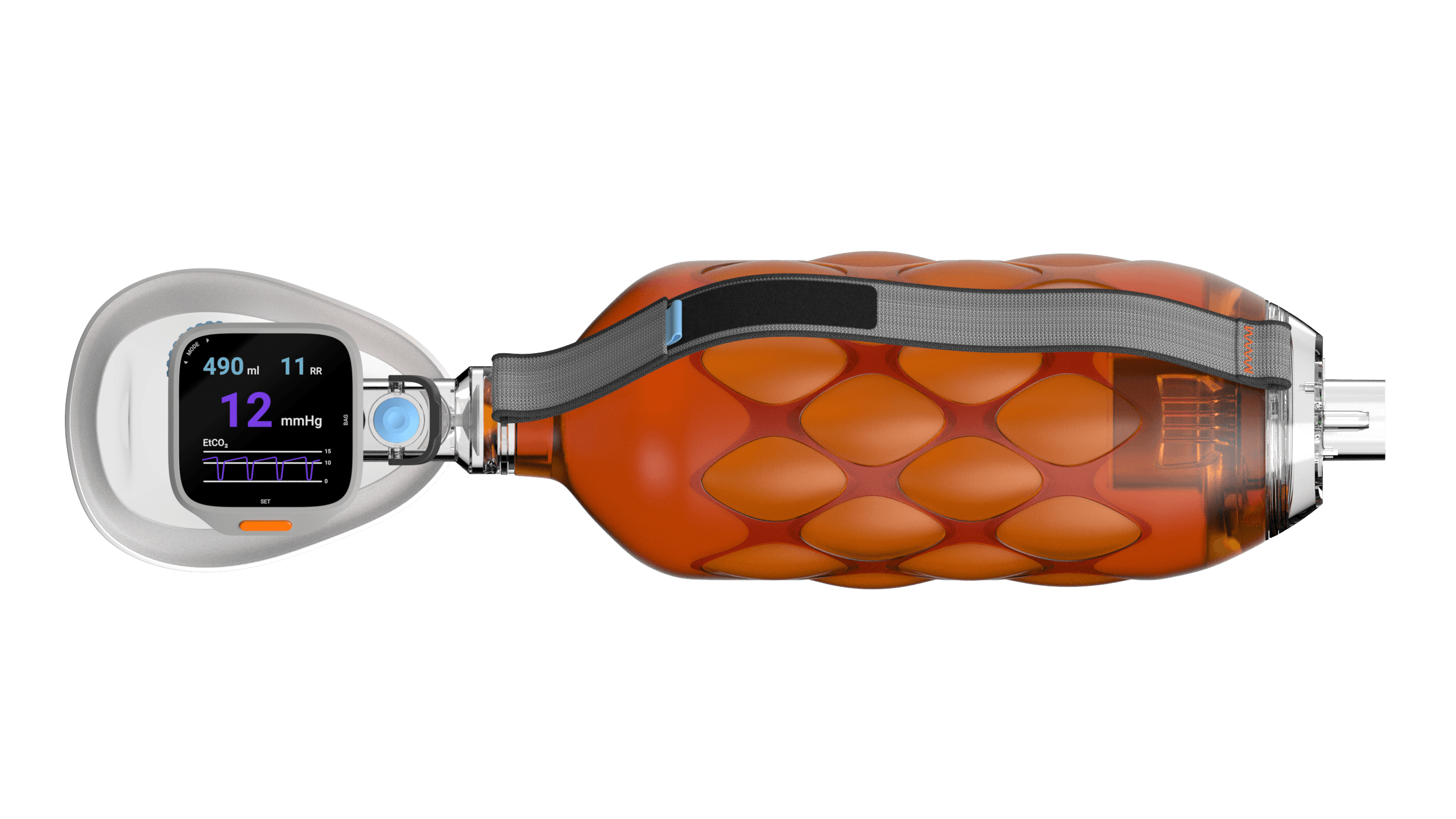
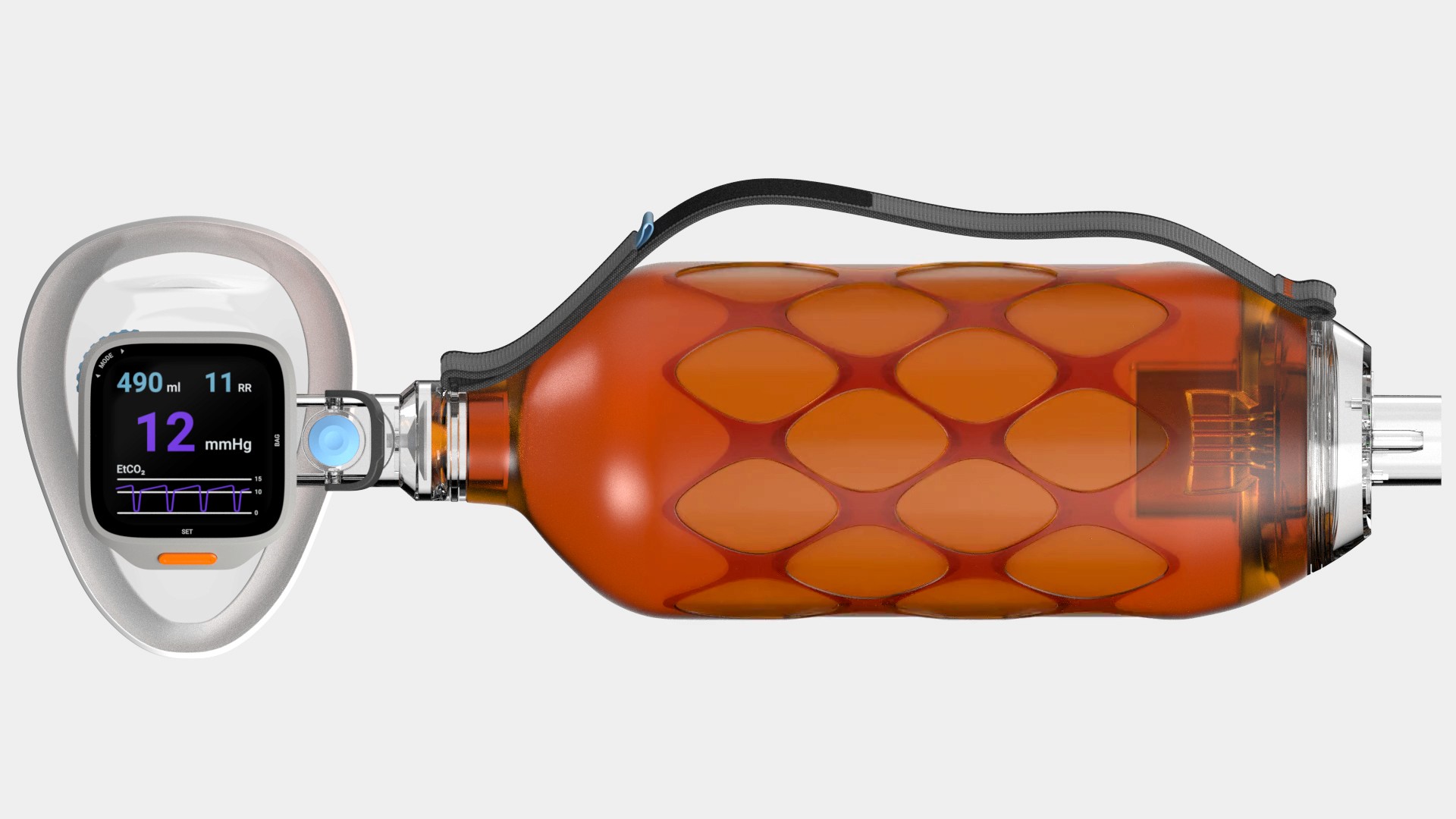
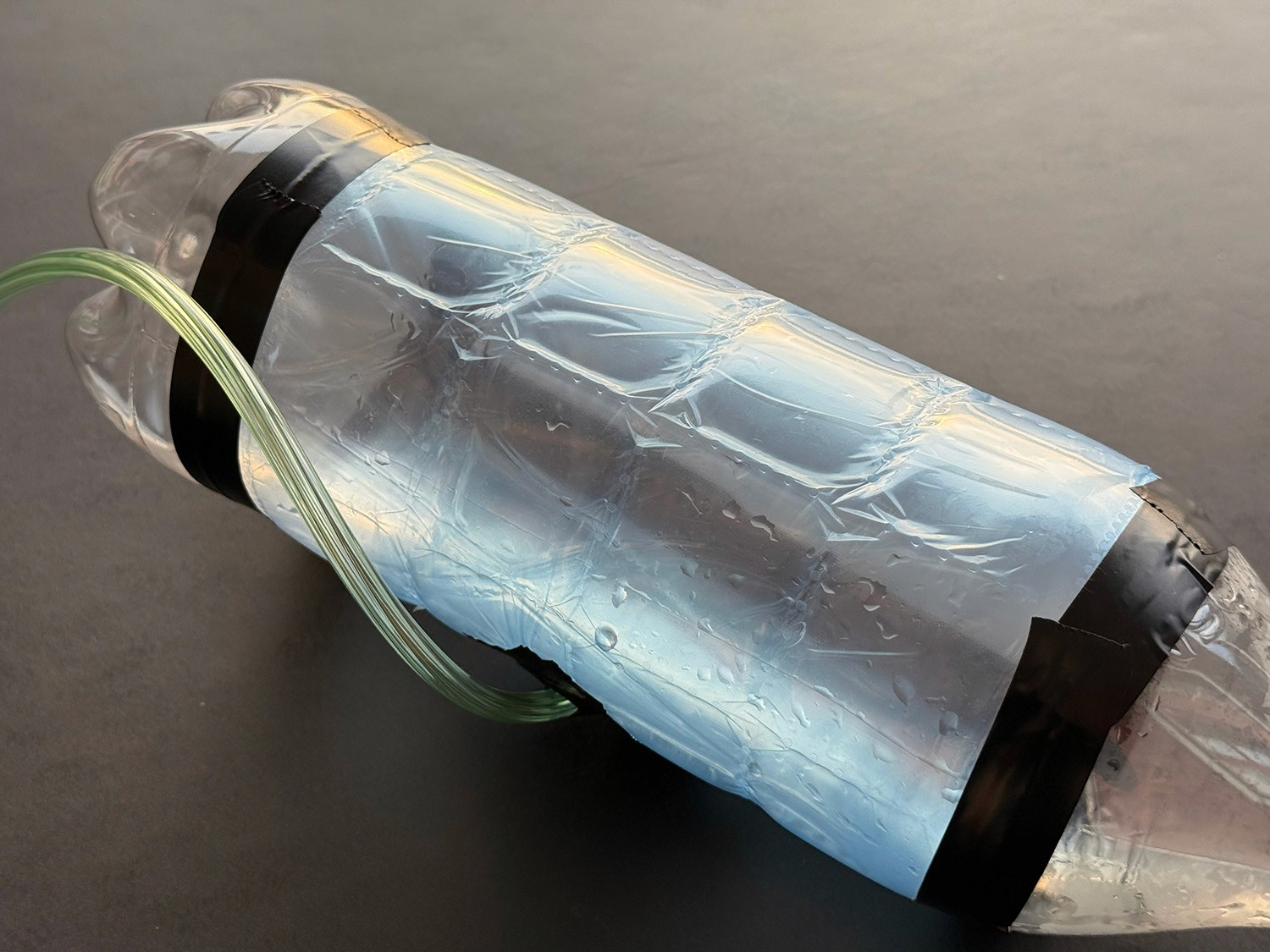
To guide the rescuer without demanding their visual attention, the device utilizes an innovative pneumatic feedback system. A compact pneumatic unit integrated into the main housing uses micro-pumps to rapidly inflate and deflate targeted air pockets molded directly into the silicone bag. This creates distinct physical resistance, instinctively guiding the user's hands to the correct ventilation rate and volume.
To guide the rescuer without demanding their visual attention, the device utilizes an innovative pneumatic feedback system. A compact pneumatic unit integrated into the main housing uses micro-pumps to rapidly inflate and deflate targeted air pockets molded directly into the silicone bag. This creates distinct physical resistance, instinctively guiding the user's hands to the correct ventilation rate and volume.
Touch
Touch
Because the brain processes touch significantly faster than sight, haptic feedback triggers an instant, intuitive physical reaction, guiding the user without ever pulling their eyes away from the patient.
Because the brain processes touch significantly faster than sight, haptic feedback triggers an instant, intuitive physical reaction, guiding the user without ever pulling their eyes away from the patient.
Haptic Feedback
Haptic Feedback
The pneumatic system acts as a dynamic physical interface, utilizing the internal air pockets to create a vocabulary of tactile cues. Different haptic patterns are programmed for different situations, such as a
The pneumatic system acts as a dynamic physical interface, utilizing the internal air pockets to create a vocabulary of tactile cues. Different haptic patterns are programmed for different situations, such as a gentle pulse to guide the correct breathing pace, or a sudden rigid block to prevent dangerous over-pressurization, allowing the bag to communicate complex clinical data purely through touch.
gentle pulse to guide the correct breathing pace, or a sudden rigid block to prevent dangerous over-pressurization, allowing the bag to communicate complex clinical data purely through touch.
Start Up
Start Up
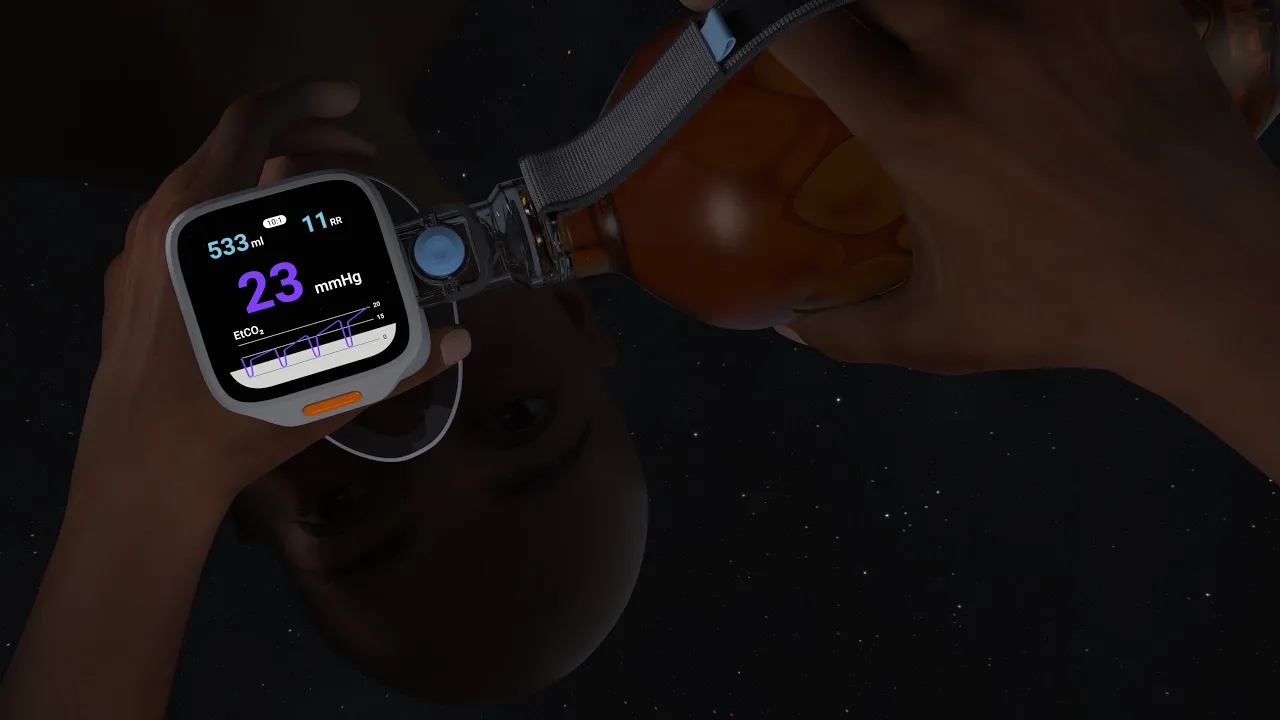
Upon powering on, a quick startup screen prompts the user to input the patient’s estimated weight. This vital, calibrates the entire device, calculating the exact tidal volume required to ensure the visual and pneumatic feedback systems guide the rescuer flawlessly.
Upon powering on, a quick startup screen prompts the user to input the patient’s estimated weight. This vital, calibrates the entire device, calculating the exact tidal volume required to ensure the visual and pneumatic feedback systems guide the rescuer flawlessly.
Clinical
Clinical
Built for expert analysis, the Clinical Mode provides paramedics with an unfiltered view of the patient's respiratory status. It prioritizes exact numerical values and detailed waveforms and data, allowing trained professionals to constantly monitor the efficiency of their resuscitation and adjust their clinical strategy instantly.
Built for expert analysis, the Clinical Mode provides paramedics with an unfiltered view of the patient's respiratory status. It prioritizes exact numerical values and detailed waveforms and data, allowing trained professionals to constantly monitor the efficiency of their resuscitation and adjust their clinical strategy instantly.
Guidance
Guidance
Designed specifically for first responders, this interface strips away complex clinical data to prevent cognitive overload. Recognizing that raw numbers can induce panic for non-experts, it utilizes highly intuitive, actionable graphics that simply guide the user to the correct rhythm and volume, ensuring safe ventilation without requiring medical interpretation.
Designed specifically for first responders, this interface strips away complex clinical data to prevent cognitive overload. Recognizing that raw numbers can induce panic for non-experts, it utilizes highly intuitive, actionable graphics that simply guide the user to the correct rhythm and volume, ensuring safe ventilation without requiring medical interpretation.
Haptic Alerts
Haptic Alerts
In the event of a dangerous complication like severe overventilation or a blocked airway, the device triggers an immediate multi-sensory override. By instantly pairing a bold visual warning with intense
In the event of a dangerous complication like severe overventilation or a blocked airway, the device triggers an immediate multi-sensory override. By instantly pairing a bold visual warning with intense haptic resistance, the system physically forces the user to pause and correct their technique before causing harm.
haptic resistance, the system physically forces the user to pause and correct their technique before causing harm.
Debriefing
Debriefing
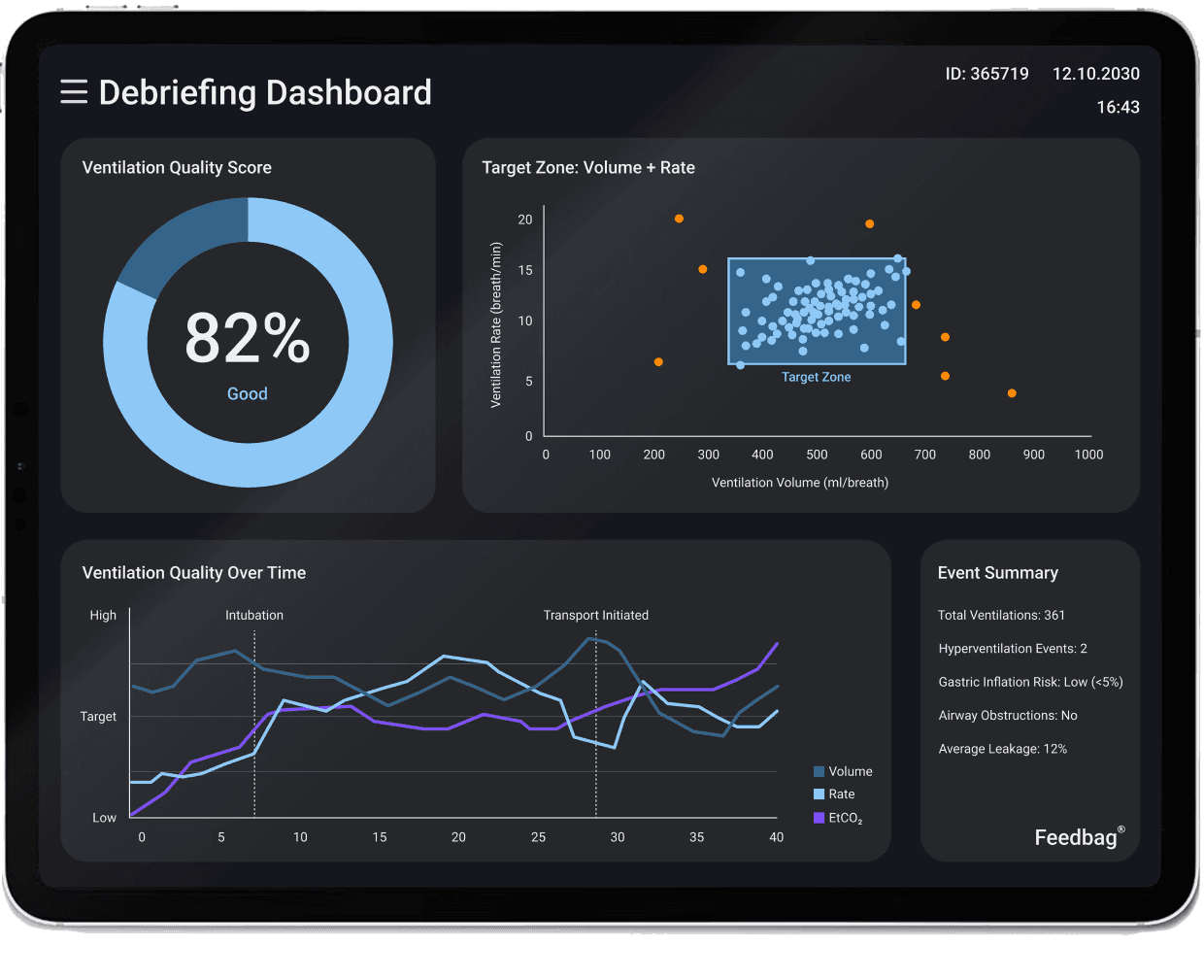
Beyond real-time guidance, the system captures vital performance data for comprehensive debriefing. The analysis screen visualizes overall ventilation quality by tracking accurate rate and volume delivery throughout the entire resuscitation. By turning stressful emergency data into clear actionable graphs, it empowers teams to review their execution and refine their skills for the future.
Beyond real-time guidance, the system captures vital performance data for comprehensive debriefing. The analysis screen visualizes overall ventilation quality by tracking accurate rate and volume delivery throughout the entire resuscitation. By turning stressful emergency data into clear actionable graphs, it empowers teams to review their execution and refine their skills for the future.
Behind the scenes
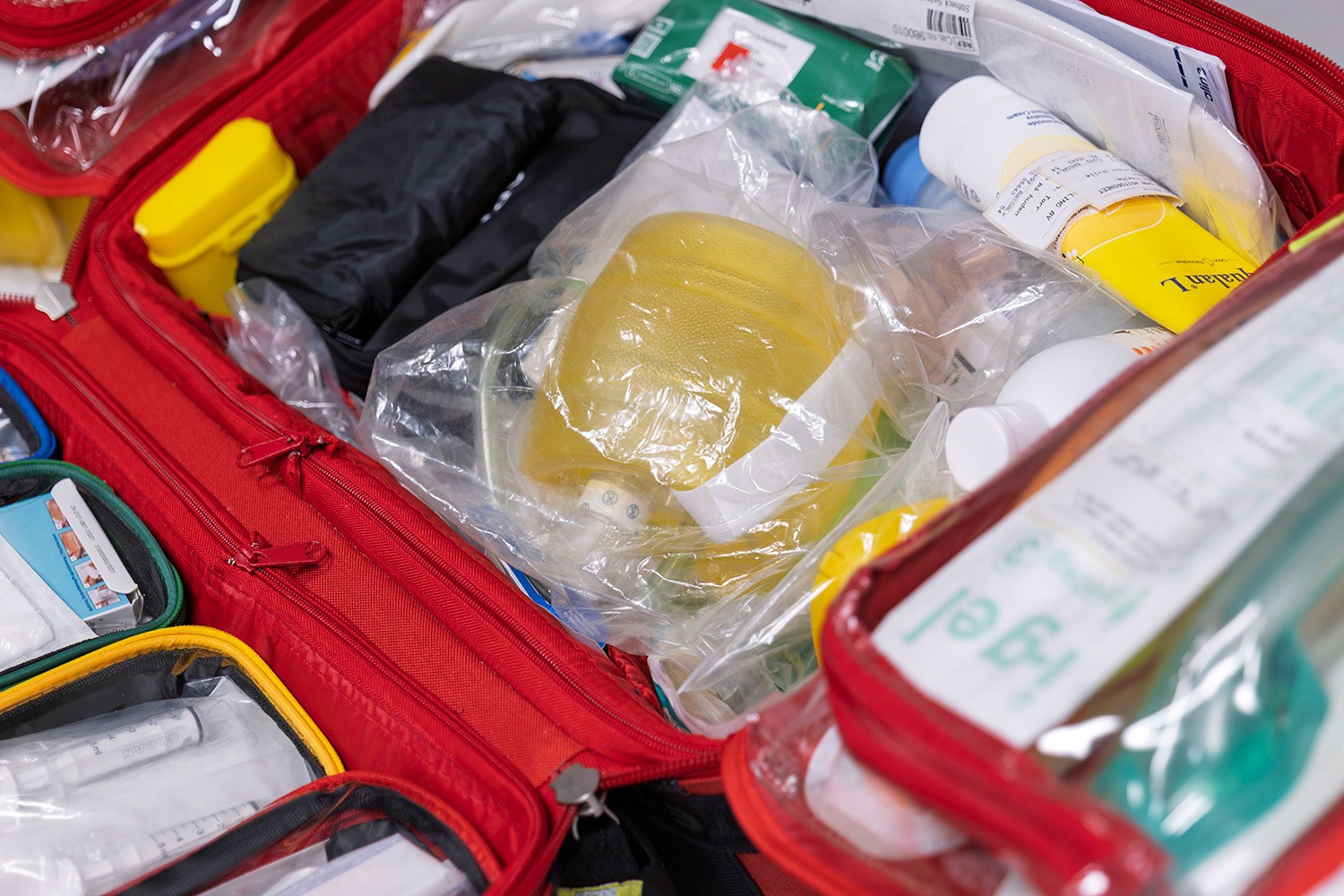
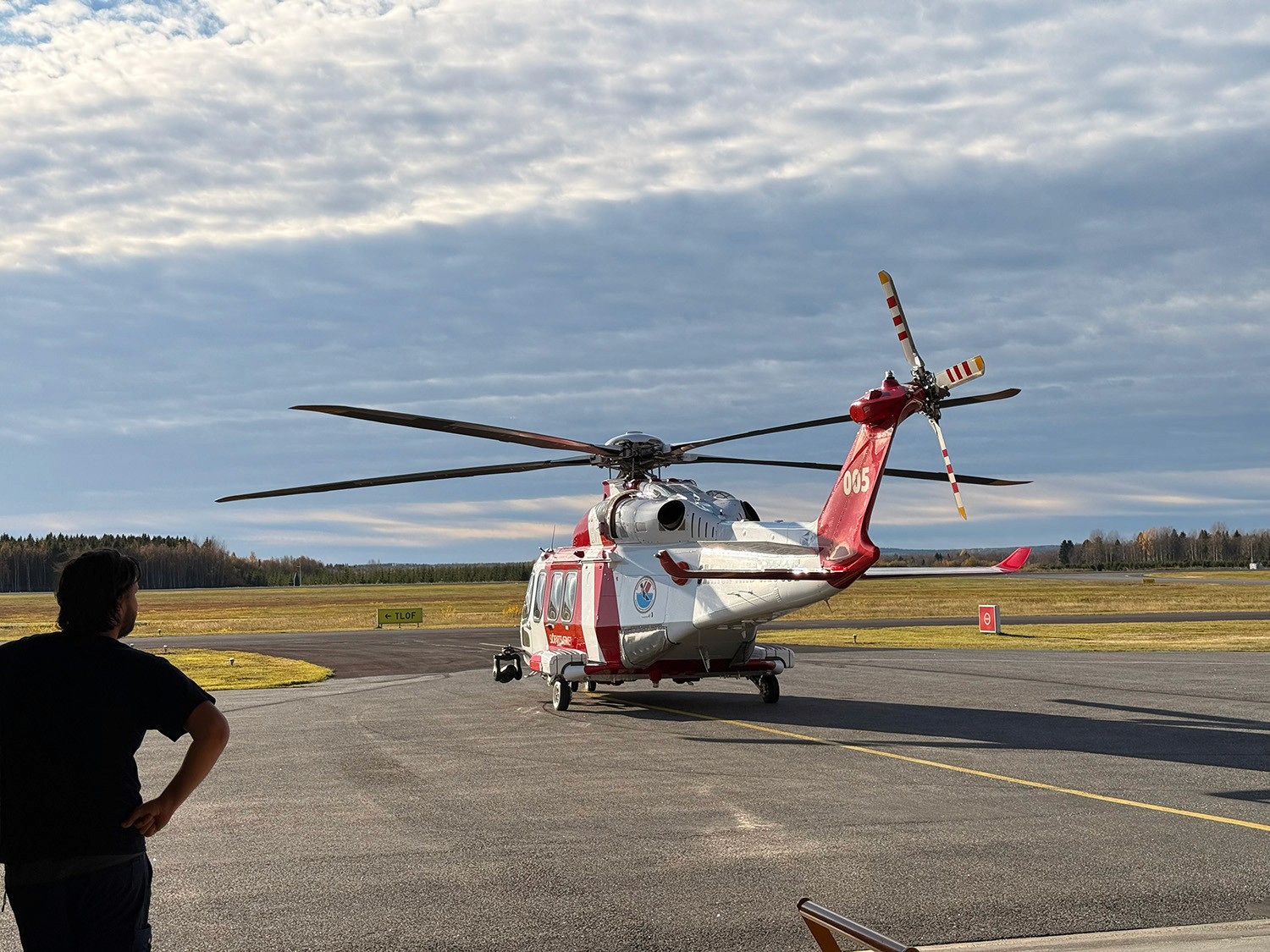
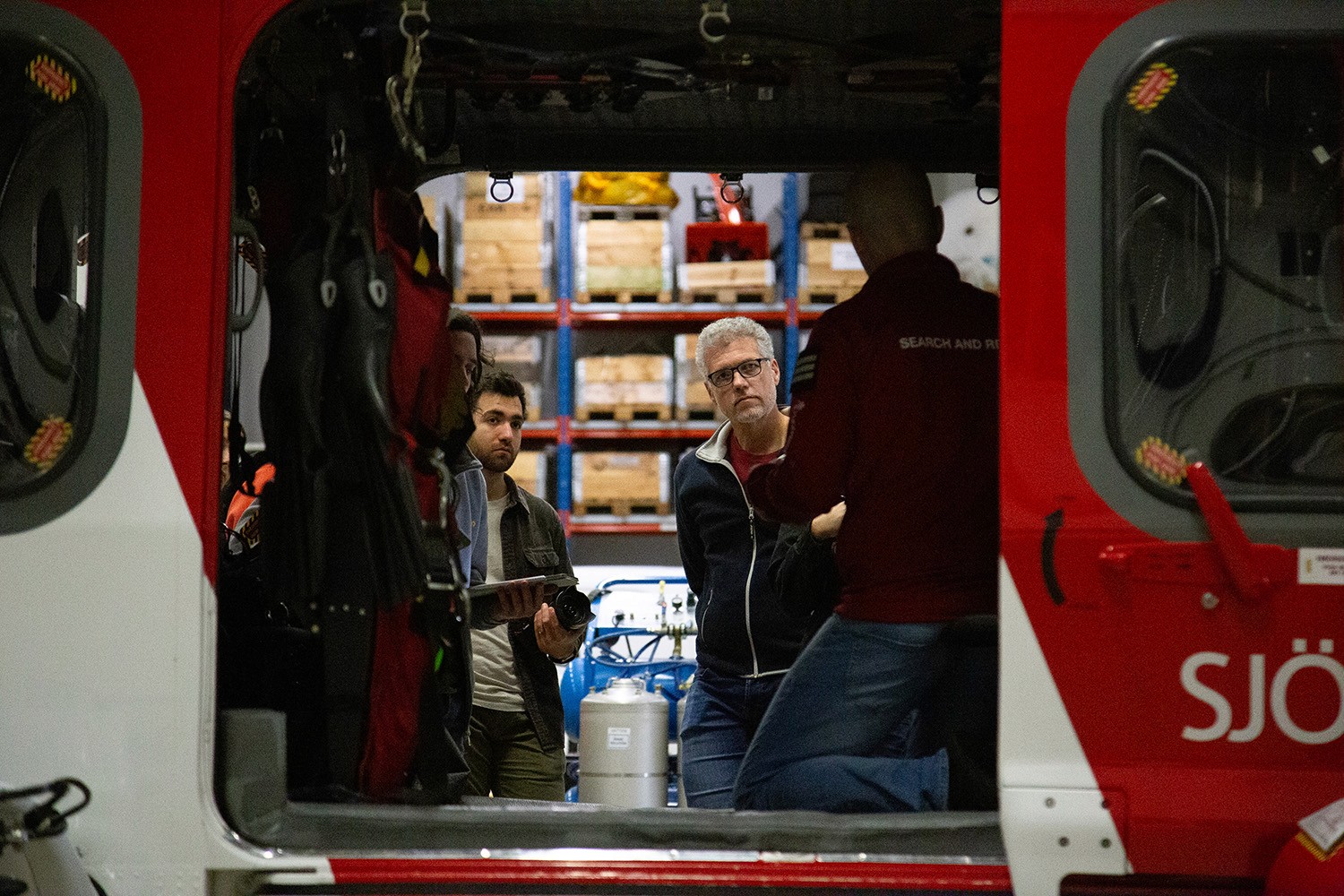
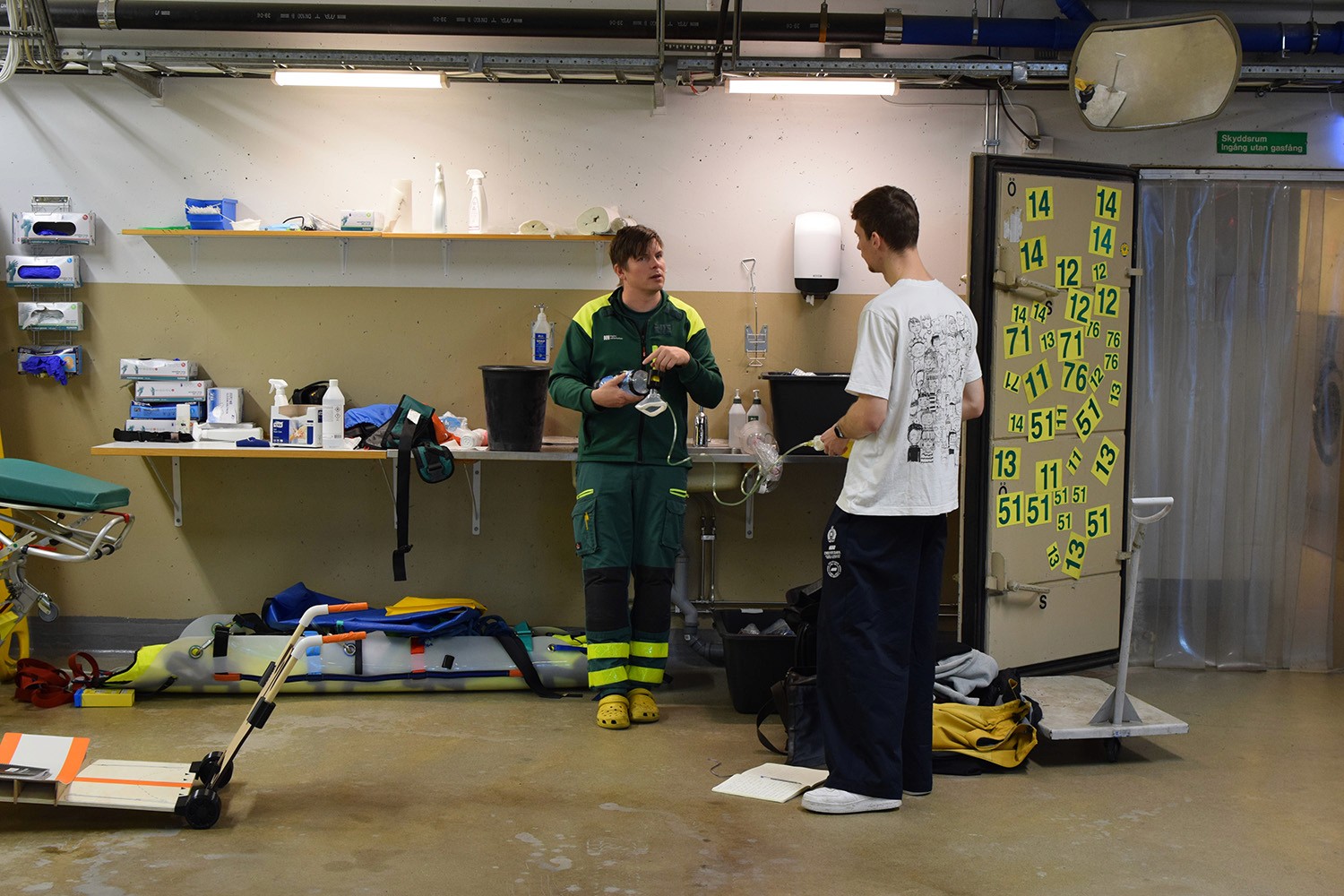
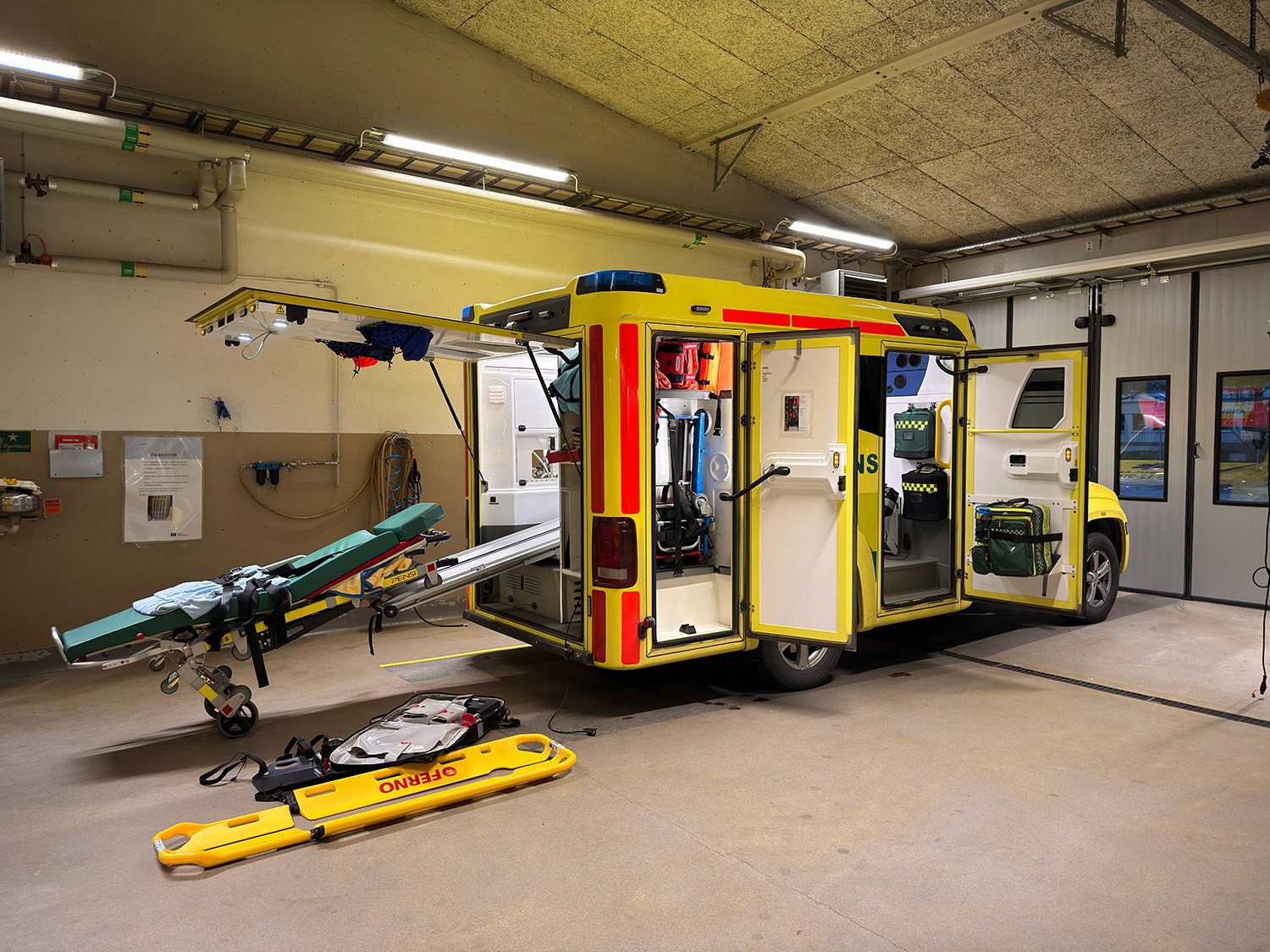
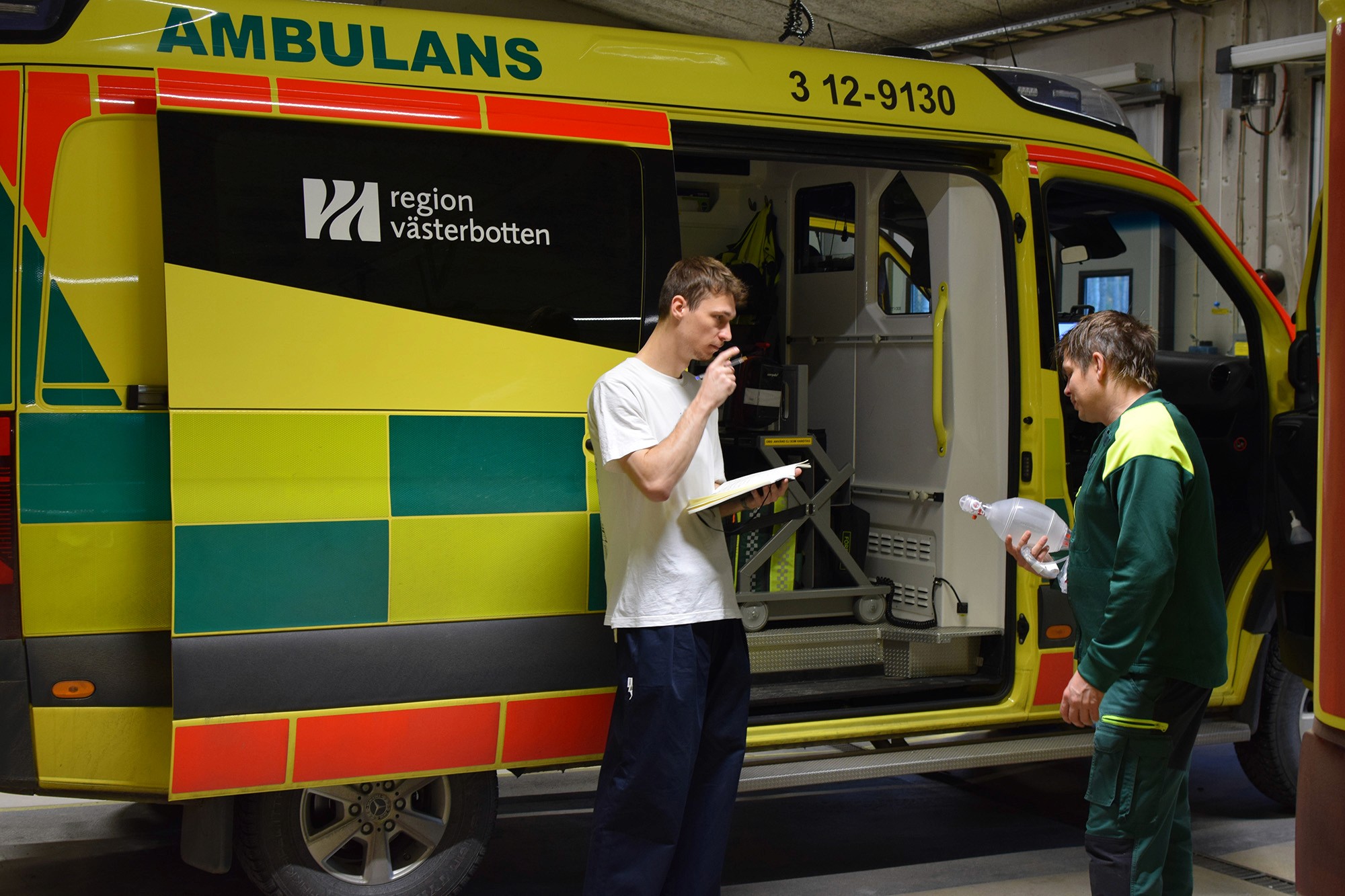
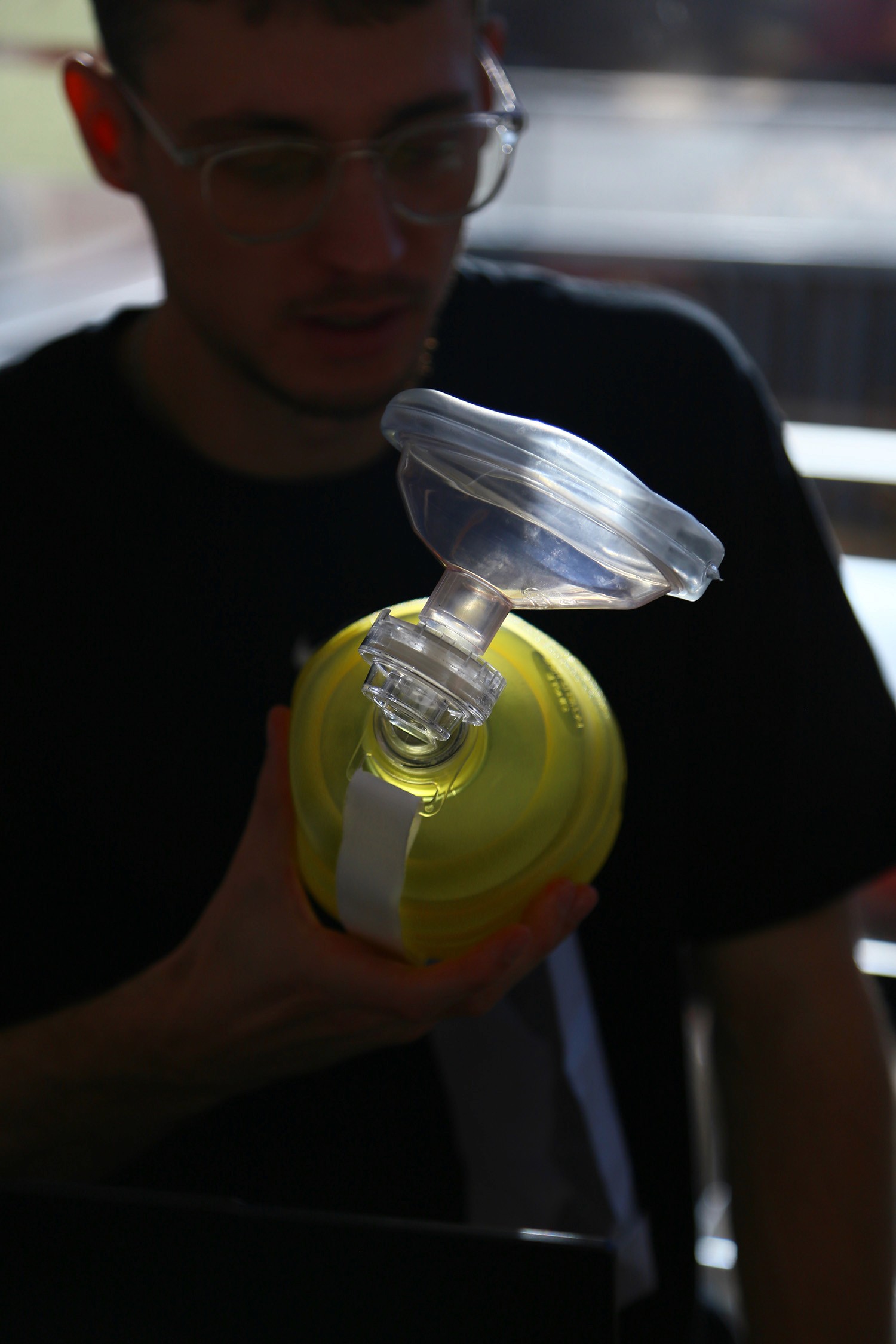
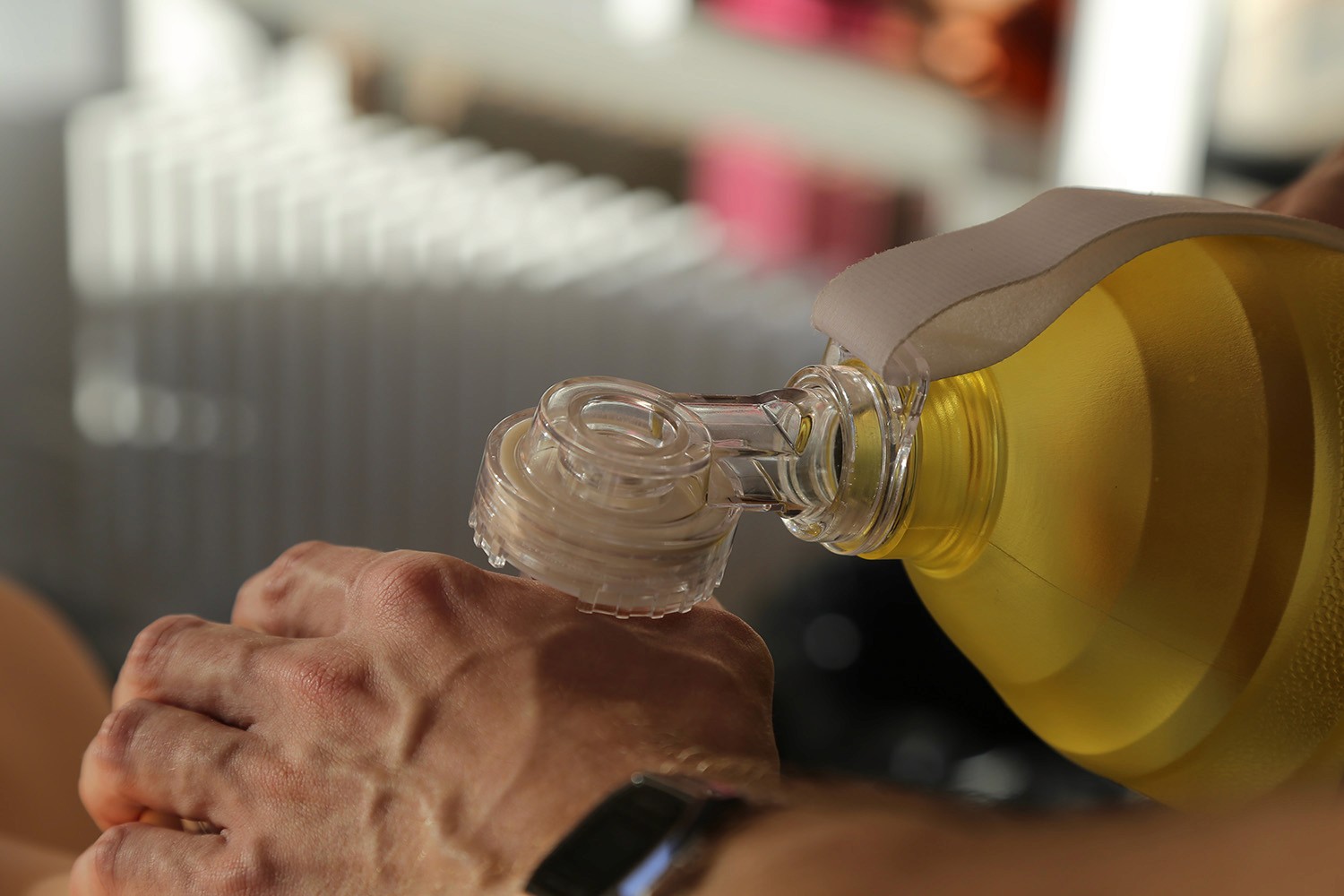
This project was deeply rooted in hands-on research and real-world context. The journey began with a CPR workshop hosted by Laerdal, setting the foundation for understanding manual ventilation. From there, immersive field trips with local paramedics, police academy, fire department and a search and rescue helicopter team provided invaluable insights into the diverse and chaotic environments where these emergencies happen. Translating these insights into physical prototypes was absolutely critical to test the ergonomics, refine the haptics, and ultimately validate the final design.
Behind the scenes
This project was deeply rooted in hands-on research and real-world context. The journey began with a CPR workshop hosted by Laerdal, setting the foundation for understanding manual ventilation. From there, immersive field trips with local paramedics, police academy, fire department and a search and rescue helicopter team provided invaluable insights into the diverse and chaotic environments where these emergencies happen. Translating these insights into physical prototypes was absolutely critical to test the ergonomics, refine the haptics, and ultimately validate the final design.
Next up
Next up